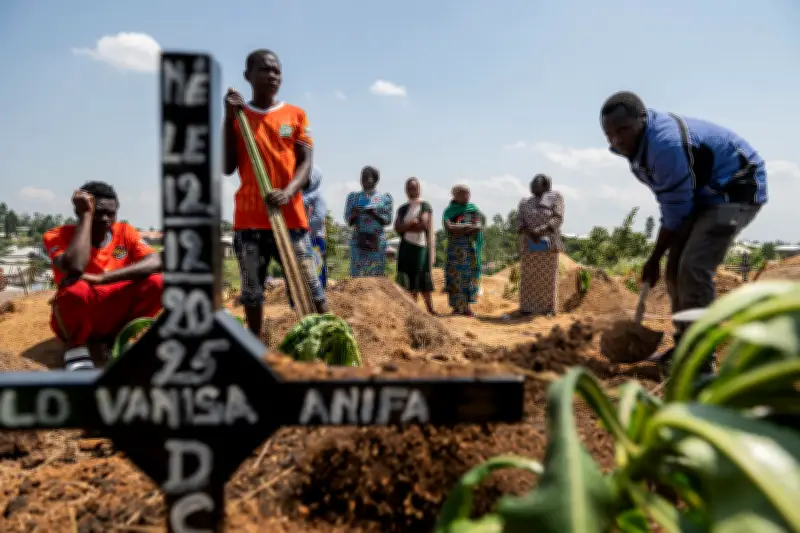
The Ebola outbreak in the Democratic Republic of Congo has become the fastest growing on record, with more than 600 people dead, according to health officials. The current epidemic, which began in August 2025, has surpassed previous outbreaks in terms of speed of transmission, particularly in the northeastern provinces of North Kivu and Ituri.
Rapid Spread in Conflict Zones
Health authorities report that the virus is spreading faster than during the 2014-2016 West Africa epidemic, which killed over 11,000 people. The World Health Organization (WHO) has described the situation as alarming, with the number of new cases doubling every three weeks. Dr. Matshidiso Moeti, WHO Regional Director for Africa, stated, "This outbreak is unprecedented in its speed and complexity. The combination of armed conflict, community mistrust, and population movement is fueling the spread."
As of July 2026, the cumulative case count has reached 1,200, with a fatality rate of approximately 50%. The outbreak is centered in the city of Beni and surrounding areas, where militia groups and military operations have hindered access for healthcare workers.

Challenges in Containment
Efforts to contain the outbreak are hampered by violence and insecurity. In June, an attack on a treatment center in Butembo killed two health workers and forced the temporary suspension of operations. The Democratic Republic of Congo's Ministry of Health, in collaboration with the WHO and Médecins Sans Frontières, is struggling to conduct contact tracing and vaccinations. The experimental Ebola vaccine, rVSV-ZEBOV, has been deployed, but coverage remains low due to logistical challenges and vaccine hesitancy.
Dr. Jean-Jacques Muyembe, director of the National Institute for Biomedical Research, said, "We have the tools to stop Ebola, but without security, we cannot reach the communities that need us most. The international community must step up support for peace and health."
Regional and Global Concerns
The outbreak has also raised fears of cross-border transmission. Uganda, Rwanda, and South Sudan have heightened surveillance at border crossings. The WHO has not declared a Public Health Emergency of International Concern, but experts warn that the current trajectory could lead to a larger regional crisis. The United Nations has called for a coordinated response, emphasizing the need for safe access for health teams and humanitarian aid.
According to the latest data, the outbreak has already claimed 605 lives, with 34 new cases reported in the past week alone. The WHO has appealed for $150 million to fund the response, but only 40% of that amount has been pledged so far.