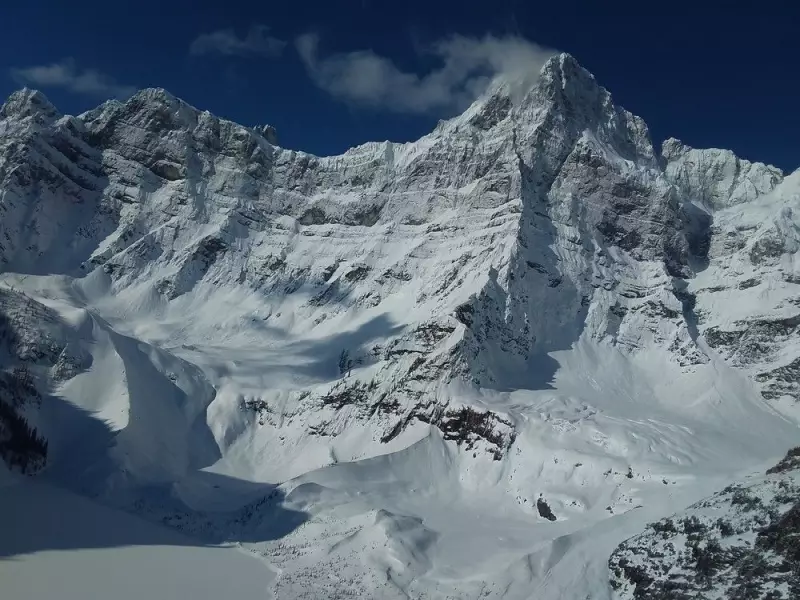
In the shadow of the Rocky Mountains, a Calgary hospital becomes the final battleground for adventurers who challenge the peaks. For the medical teams stationed there, winter brings a grim reality: the mountain ultimately decides who returns home and who stays behind forever.
The Coldest Call: A Surgeon's Decision
It was deep winter when the pager buzzed. The alert was for a rewarming case—a patient with severe hypothermia, a consequence of the majestic yet deadly peaks that draw global explorers. The call to be made was stark and carried immense weight. On one side lay a drastic, invasive procedure: placing drainage tubes into the heart and connecting them to a heart-lung machine, a technology capable of warming even the coldest blood. On the other side was the decision to stop, to declare death.
As every doctor in this field knows, a core tenet guides them: a patient is not dead until they are warm and dead. This principle forces agonizing choices in the thin, cold air between clinical protocol and human hope.

A Seasoned Climber, A Missing Partner
The patient was a seasoned mountain climber from a distant country, dug out of the snow after being buried for two hours with no detectable heartbeat. Her travelling partner remained missing, a haunting detail that underscored the peril. The emergency transport team, ever optimistic, presented the case with clinical urgency, highlighting the best of the bloodwork numbers.
Yet, most signs whispered of death. The surgeon, drawing on hard-earned instinct, pondered a difficult truth: sometimes, the mountain claims its own, and some may be meant to stay buried. In the ICU, the team huddled. The facts were laid bare. There was little hope, but a sliver—just enough to torment a decision-maker. This was the end of the line, and the call belonged to one person.
The Sacred Dance of Revival
Despite the odds, the choice was made. "Let's go," the surgeon stated, sharp and sure—a necessity in a field where a surgeon can be wrong but never uncertain. The surgical team scattered, a well-rehearsed unit preparing for a fierce fight through the night.
The procedure, a delicate and profound dance, began. Tubes were placed, and dark, cold blood filled the circuit of the heart-lung machine. The pump took over with a hum felt more than heard, a vibration like being submerged. Then came the hardest part: the wait. The team could only stand by, allowing fate and medicine to run their course as the body's temperature slowly rose.
All eyes were fixed on the monitor, waiting for a single, miraculous blip—a signal of electrical activity in the heart. That blip would mean more than a physiological response; it would mean a rebirth, a sacred victory snatched from the mountain's grip. It is a moment that causes even the most seasoned professional to feel a flutter of awe, a testament to the stubborn will of the human heart.
This scene, set in a Calgary hospital in January 2026, is a recurring winter drama. It highlights the immense risks taken by those drawn to the Rockies' beauty and the heavy burden carried by the rescue crews and medical teams who deal with the aftermath. They operate in the narrow place where heroic effort must be weighed against the potential desecration of wielding a scalpel on a body that has already surrendered. Every buzz of the pager is a summons to that precipice.