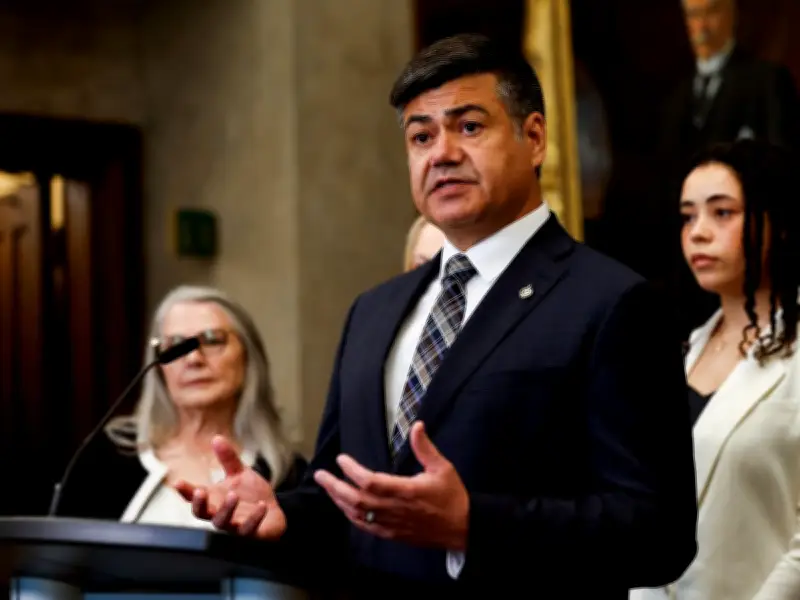
Conservative MP Corey Tochor of Saskatchewan introduced a private member's bill, C-286, days before Parliament's summer recess, aiming to amend federal law to allow doctors to prescribe psilocybin-containing drugs for depression, particularly end-of-life depression, and to expedite regulatory approval. The bill targets psilocybin, the psychoactive compound in magic mushrooms, which remains a controlled substance.
Why a Conservative MP Is Backing Psilocybin Access
Tochor's bill may surprise those familiar with the Conservative Party's historically tough stance on drugs. However, C-286 is a narrow medical measure, not a broad legalization or recreational use proposal. It amends the Controlled Drugs and Substances Act and the Food and Drugs Act, moving psilocybin and psilocin out of the most restricted tier into a framework that already permits doctors to prescribe controlled drugs, while directing Health Canada to fast-track related drug submissions.
Private member's bills rarely become law, but Tochor's initiative deserves serious consideration when the House returns on September 21, according to the article. The bill is named after Thomas Hartle, a Saskatoon father diagnosed with stage 4 colon cancer in 2016. In 2020, Hartle became the first Canadian granted a legal exemption to use psilocybin, which alleviated his end-of-life depression where antidepressants failed. However, after the exemption lapsed, renewal requests faced delays—one sat for 511 days before Health Canada denied it. Hartle, unable to access legal treatment in Canada, flew to the Caribbean for psilocybin therapy, which made his final months bearable. He died in 2024 at age 56.

Psilocybin: Natural, Non-Toxic, and Non-Addictive
Tochor criticized the disparity: “The state will help you end your life but won’t grant you legal access to a plant that is non-toxic and non-addictive.” He noted that Parliament expanded assisted dying but failed to facilitate access to a substance that poses no lethal risk. Psilocybin is a naturally occurring compound found in dozens of wild mushroom species, used for millennia by civilizations such as the Aztecs, who called it teonanácatl (“flesh of the gods”). Its natural origins, while not proving therapeutic efficacy, highlight the contrast with synthetic pharmaceuticals.
Psilocybin produces no physical dependence, and tolerance builds so rapidly that a second-day dose has minimal effect, making addiction virtually impossible. As one Johns Hopkins researcher noted, no one experiences withdrawal cravings. Overdose is extremely rare, with no established lethal dose in humans—estimates suggest it would require roughly a thousand times a typical dose. The primary risks are psychological: a dose can trigger panic or a frightening sense of self-dissolution, known as a “bad trip,” especially if taken alone without support. Therefore, the bill confines psilocybin use to clinical settings under medical supervision.
Impact on Patients and Regulatory Process
If passed, C-286 would streamline access for terminally ill patients suffering from depression, reducing bureaucratic hurdles that have hindered exemptions. Health Canada would be required to prioritize reviews of psilocybin-based drug submissions, potentially accelerating availability. The bill does not legalize psychedelics for the general public or recreational use, emphasizing its medical focus.
The article concludes that while private member's bills often stall, Tochor's proposal is a serious, well-considered effort that merits cross-party attention. It highlights the contrast between Canada's expansion of medical assistance in dying and the barriers to accessing a substance that could alleviate end-of-life psychological suffering.