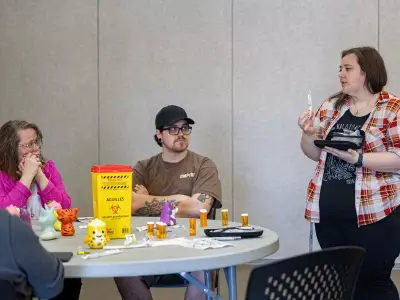
I have been attending the same strength class at The Academy in Calgary for over eight years. You might think I would know the start time by now. But if I arrive late, I know Darci will have set out the weights for us latecomers. She also reminds the instructors when they lose count, which is crucial because no one wants to do extra pushups. Another regular, Debbie, lightens the mood with her snarky comments, making us forget the hard work. Our instructor Dianne, a relative newcomer of less than two years, inspires us with her dedication to fitness since retiring.
I have many close friends, but I rarely see them these days. Some have moved away, while others are busy with children or full-time jobs. However, like clockwork, I meet my gym buddies every Thursday for weights and conversation. It turns out that this matters more than I realized.
What Are Weak Ties?
Psychologists refer to these relationships as weak ties — acquaintances and casual contacts that involve less emotional intensity than close friendships. Research by Gillian Sandstrom at the University of Cambridge shows that interactions with weak ties are meaningfully linked to happiness and a sense of belonging.

In one study, people who had a genuine, friendly exchange with a Starbucks barista reported a more positive mood than those who kept interactions purely transactional. The exchange did not need to be lengthy, just sincere.
The Serious Impact of Loneliness
The stakes of social disconnection are anything but small. The World Health Organization estimates that loneliness accounts for approximately 871,000 deaths each year. In 2023, the U.S. Surgeon General declared loneliness a national epidemic.
People who are lonely are twice as likely to become depressed, and social isolation raises the risk of stroke, heart disease, diabetes, and cognitive decline. Loneliness is a public health crisis hiding in plain sight.
Insights from Research on Older Adults
Nancy Newall, associate professor of Psychology at Brandon University, has spent years studying social isolation among older adults. She notes that while the numbers are concerning, they also carry an important counterpoint. According to her research and other studies, an estimated 20 percent of older adults are at risk of social isolation — a significant figure that translates into a large number of Canadians.
Newall encourages people to remain active in the community and not withdraw from regular superficial contact with others. However, she points out that the idea that as we get older we will inevitably be isolated and lonely is simply incorrect.
Social Wisdom in Aging
In fact, aging can bring a kind of social wisdom. Research by psychologist Laura Carstensen and colleagues suggests that as we get older, we become more selective, pruning our social networks in favor of relationships that are more meaningful and of higher quality. This selectivity, Newall explains, may help explain why older adults often report higher well-being than younger people, despite having fewer social connections overall.
Still, life transitions from retirement to friends moving away can erode the social structures that once kept us connected with little effort. School and work provided a built-in community. Without them, connection requires more intention.