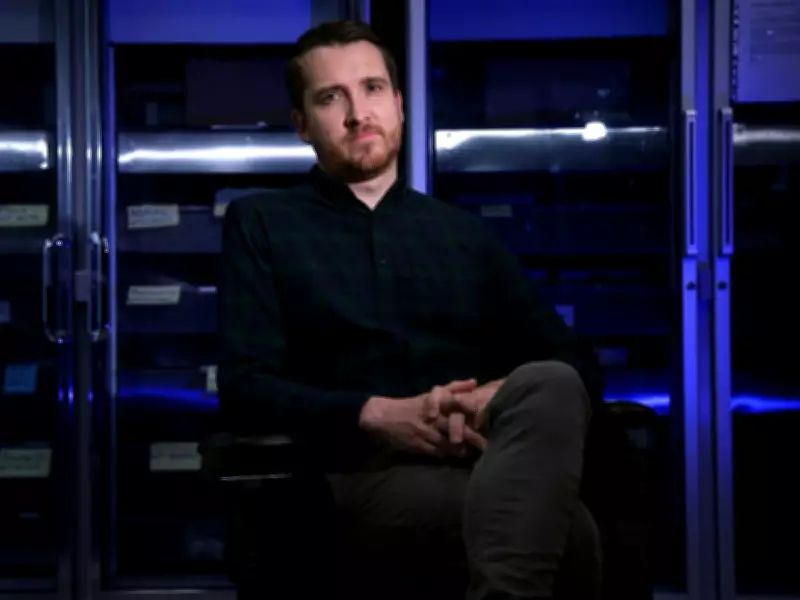
Ottawa's medical officer of health, Dr. Trevor Arnason, has issued a stark warning about the impending closure of two downtown supervised drug consumption sites, predicting a 'challenging summer' ahead as the busy tourist season begins.
Speaking before the city's board of health, Arnason expressed deep concern over the impact of these closures on individuals, the healthcare system, and the community at large. 'The concern for me is that we are coming up to the summer months where we see more people out in the community and in those areas we are likely to see more individuals looking for services they can't get,' he stated.
Arnason's primary worry is a surge in paramedic calls and emergency department visits, based on trends observed in other jurisdictions. 'My biggest concern is that paramedic calls are going to go up and emergency department visits may go up fairly quickly. I think we as a community are going to experience concerning levels of requests for paramedic calls and other things,' he added.

In March, the Ontario government announced it would cease funding for all remaining supervised consumption sites in the province effective June 13. For Ottawa, this means the closure of sites at the Sandy Hill Community Health Centre and another in Lowertown run by Ottawa Inner City Health. These two facilities collectively averaged approximately 5,500 visits per month.
This follows the province's withdrawal of funding in 2025 for two other Ottawa sites: one at the Somerset West Community Health Centre and another operated by Ottawa Public Health on Clarence Street in the ByWard Market. Since the Somerset West site closed, there has been a noticeable increase in public drug use, emergency calls, and overdoses in the surrounding area.
The province has shifted its focus to Homelessness and Addiction Recovery (HART) hubs, which aim to provide treatment and services. However, Arnason, in a prior memo to the Ottawa Board of Health, emphasized that communities are 'strongest and safest' when services operate across the full continuum of care, including prevention, outreach, supportive housing, and harm reduction measures like supervised consumption sites.
Ottawa currently has two HART hubs: one linked with the Somerset West Community Health Centre and another in Bell's Corners connected with the Pinecrest-Queensway Community Health Centre. While Arnason acknowledged the province's investment in HART hubs as a positive development, he stressed that a comprehensive public health approach requires a full spectrum of interventions, including treatment that incorporates harm reduction, peer engagement, and prevention strategies tailored to individual needs.
Hospitals are collaborating with Ottawa Public Health and other stakeholders through the Overdose Prevention and Response Task Force to mitigate the effects of the closures, but Arnason cautioned that the coming months will test the city's capacity to respond to increased demand for emergency services.