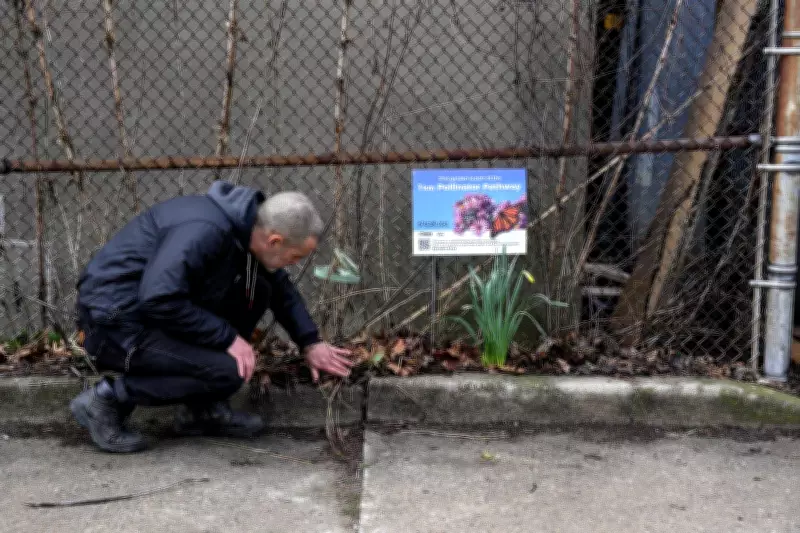
Adam Barnes, founder of Rewilders Toronto, a community-based ecological initiative, tends to a planted pollinator garden in Toronto, on Thursday, April 16, 2026. THE CANADIAN PRESS/Chris Young
How 're-wilding' can make Canada's cityscapes more climate resilient and bee friendly
As cities across Canada grapple with the effects of climate change, a growing movement known as 're-wilding' is gaining traction. This approach involves restoring natural ecosystems within urban environments, aiming to boost biodiversity, enhance climate resilience, and create habitats for essential pollinators like bees.
Adam Barnes, the founder of Rewilders Toronto, is at the forefront of this initiative. His organization focuses on planting pollinator gardens and reintroducing native plant species throughout the city. These green spaces not only provide food and shelter for bees but also help mitigate the urban heat island effect, reduce stormwater runoff, and improve air quality.

Rewilding projects are popping up in cities from Vancouver to Halifax, transforming vacant lots, rooftops, and parkways into thriving natural habitats. Experts say these efforts are crucial for adapting to climate change, as they help cities manage extreme weather events and support local wildlife.
In Toronto, Barnes and his team have planted dozens of gardens, each designed to attract a variety of bee species. The gardens are also educational, teaching residents about the importance of native plants and pollinators. Barnes emphasizes that re-wilding is not just about planting flowers; it's about creating resilient ecosystems that can withstand climate stresses.
The benefits extend beyond bees. Rewilded areas can lower temperatures, absorb carbon dioxide, and provide recreational spaces for communities. As Canada's urban centers continue to expand, re-wilding offers a sustainable path forward, blending nature with city life.
With climate change posing increasing threats, initiatives like Rewilders Toronto demonstrate how local actions can have a global impact. By making cityscapes greener and more bee-friendly, Canada is taking a step toward a more resilient future.