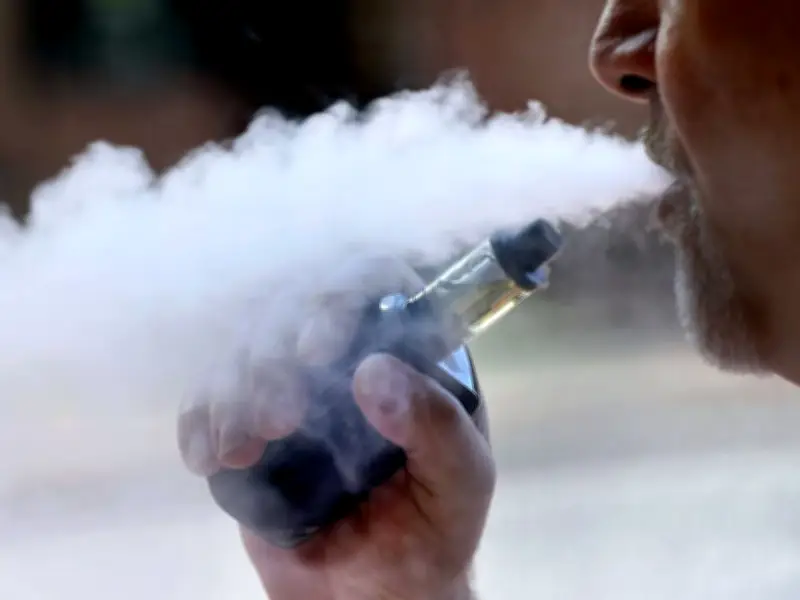
Five years is a very long time to announce a policy and not implement it, but Ottawa’s promised ban on flavoured vapes has now outlasted a health minister, a pandemic, and several news cycles’ worth of moral alarm. The Globe and Mail weighed in with an editorial on Monday insisting that the government’s stalling has gone on far too long. The case leans on frightening figures about the young, warnings that vaping leads kids to smoking, and a study of secret shoppers said to prove retailers cannot be trusted. It is, on its face, an argument built to alarm rather than to inform, and it collapses the moment one bothers to check the footnotes.
Youth Vaping Data Contradicts Alarm
Take the editorial’s opening point, that 14 per cent of Canadians aged 15 to 19 report having vaped in the last 30 days. This happens to be true and it comes straight from the 2022 Canadian Tobacco and Nicotine Survey, courtesy of Health Canada itself. But that figure may not be as alarming as we are being led to believe, given that Health Canada’s own data describe youth vaping for that cohort as essentially flat since 2019. The trend line being flat for a cohort that includes adults (18+) is a curious way to argue that the sky is falling and that a ban is necessary.
The Globe, whether it is intentional or not, failed to check Health Canada’s own tracking of the age group the ban actually targets, which is youth aged 12 to 17. That data paints a drastically different picture. By 2024, from its peak in 2019, the number of youth in that age bracket who had vaped in the last 30 days had fallen by more than 60 per cent, to six per cent. Cigarette smoking among teenagers hasn’t just declined as well, it’s plummeted. Just four per cent of 15-to-19-year-olds report smoking at all, with daily smoking among Canadian youth in that same age bracket sitting at less than two per cent. If every daily-smoking Canadian teenager turned up at once, according to Health Canada’s own illustration, an NHL arena would not be half full.

Gateway Theory Collapses
This is the point at which the “gateway theory” quickly evaporates because if vaping caused smoking, the smoking rate should have increased dramatically as, and after, vaping peaked in 2019. Instead both have been falling in tandem, which is cause for celebration for anyone who actually cares about the issue of youth access.
The Globe editorial also fails to mention what vape flavours actually do for the adult smoker, which is the primary justification for vaping products to exist in the first place. A 2023 American study of nearly 70,000 adult vapers, published in Harm Reduction Journal, found that those using flavoured e-cigarettes had more than double the odds of quitting smoking outright compared with those who stuck to tobacco flavour, and that fruit was the flavour most often used at the moment they quit smoking. Strip away the flavours and you strip away, for many smokers, the one thing that made quitting bearable and successful.
Enforcement, Not Prohibition, Is the Solution
Then there is the Alberta secret-shopper study, which found that 42.5 per cent of vendors would sell a vape to a minor. This is a genuine problem, but it is so obviously a problem of enforcement and it also happens to be a problem with a rather easy cure. Mystery-shop programs paired with feedback to retailers have pushed alcohol ID-check compliance from 80 per cent up to 94 per cent in just 15 months in four U.S. states, according to a 2018 study. A 2012 study found similar checks on tobacco sellers have lifted compliance from the mid-50s to 85 per cent over 10 months in three U.S. states. Repeat visits, fines with actual teeth for repeat offenders, and the threat of a revoked licence close most of the remaining gap. This is a far more serious policy than banning the product and hoping the problem disappears along with it.