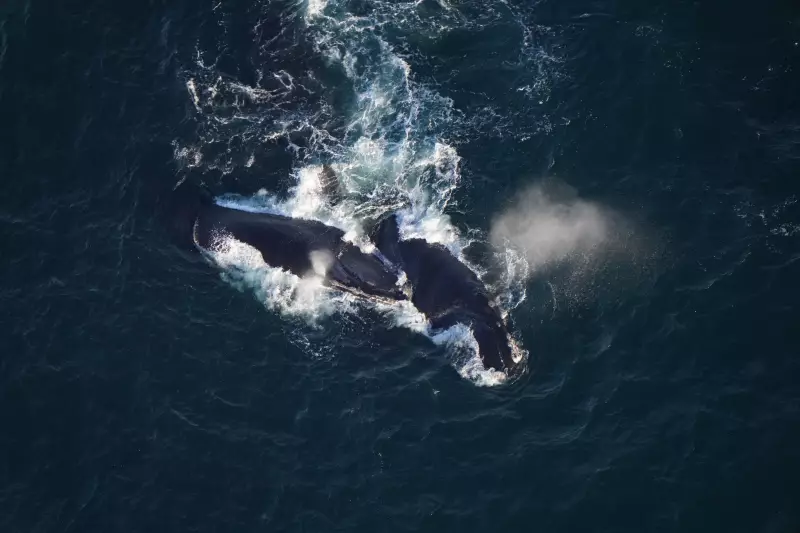
An aerial survey has delivered a rare and encouraging piece of news for marine conservationists: North Atlantic right whales were observed in the waters of southern New England. The sighting, which occurred on January 8, 2026, was confirmed by the New England Aquarium and offers a glimmer of hope for the critically endangered species.
A Rare and Significant Sighting
The observation was made during a routine aerial survey flight. The team from the New England Aquarium, operating under a National Marine Fisheries Service permit (#25739), successfully documented the presence of the whales. This sighting is particularly significant given the perilously low population numbers of North Atlantic right whales, which are estimated to be fewer than 360 individuals. Every confirmed sighting provides crucial data on their migration patterns, health, and habitat use.
Why This Sighting Offers Hope
For researchers and advocates, the presence of these whales in southern New England in early January is a positive indicator. It suggests that the animals are utilizing traditional feeding grounds, which is essential for their survival and reproductive success. The phrase "leaves us hopeful," attributed to observers, underscores the emotional and scientific weight of this discovery. Each whale represents a vital part of the species' future, and tracking their movements helps inform critical protection measures, such as seasonal speed restrictions for ships and fishing gear modifications to prevent entanglements.

The Broader Context of Whale Conservation
This sighting arrives amid ongoing, intense efforts to prevent the extinction of the North Atlantic right whale. The species faces constant threats from vessel strikes and entanglement in fishing gear. Data from sightings like this one are instrumental for government agencies and conservation groups working to implement and adjust protective regulations. While the sighting is a hopeful moment, it also serves as a stark reminder of the continuous conservation work required to ensure these marine giants have a future in the Atlantic Ocean.
The New England Aquarium's aerial survey program is a key component of this monitoring effort. By consistently patrolling known habitats, researchers can build a clearer picture of whale behavior and population trends, turning individual moments of hope into actionable science for long-term recovery.