The Heartbreaking Tale of Punch: A Baby Macaque's Struggle for Acceptance
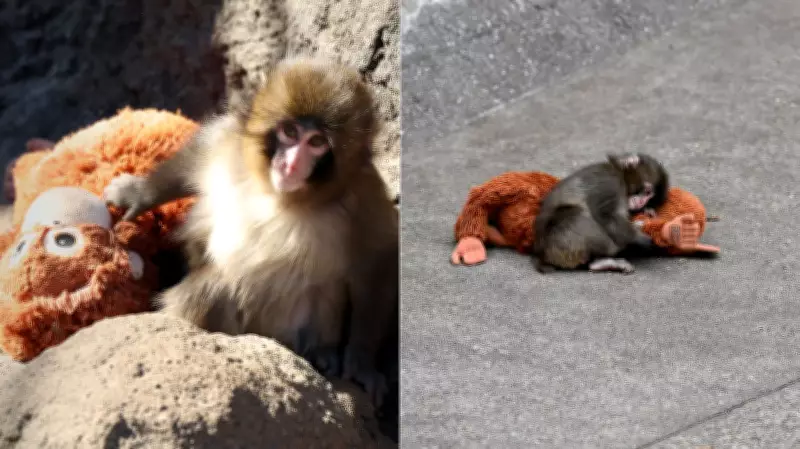
Across Japan and around the world, heartbreaking photos and videos have circulated of Punch, a baby Japanese macaque born at Ichikawa City Zoo in July 2025. Known affectionately as Panchi-kun in Japanese, this infant primate was abandoned by his mother shortly after birth, forcing zookeepers to step in as surrogate caregivers. What has particularly captured public imagination is Punch's constant companion: a small orangutan plushie from IKEA that he determinedly drags throughout his enclosure and clings to during nap times.
A Substitute for Maternal Comfort
For baby Japanese macaques, clinging to their mother's body immediately after birth is crucial for developing muscle strength and establishing vital bonds. Since Punch lacked this fundamental connection, zoo staff provided the plush toy as both a physical stand-in for maternal presence and a tool to combat his evident anxiety and loneliness. The visual contrast between the solitary infant and his trusted stuffed companion has proven emotionally powerful, explaining why these images spread rapidly across social media platforms.
Despite being reintroduced to his macaque troop in January, Punch has faced significant challenges integrating with his own kind. Zoo staff report that older Japanese macaques sometimes chase him around the enclosure, highlighting his ongoing struggle to find acceptance within the social hierarchy. While the zoo indicates that other macaques are gradually warming to Punch, his difficult journey raises important questions about primate behavior and maternal instincts.

The Rarity of Primate Abandonment
According to primate behavioral experts, cases like Punch's represent unusual exceptions rather than typical patterns. John Mitani, a primate behavioral ecologist who studies our closest living relatives, emphasizes that primate mothers are "some of the best mothers you will find in the animal kingdom." He notes their typically attentive care during infants' first weeks and months, with Japanese macaque mothers especially known for maintaining lifelong social bonds with daughters who remain in their natal groups.
Alison Behie, a professor of biological anthropology at Australian National University, explains that while rare, abandonment does occasionally occur, particularly in captive environments. She suggests that Punch's birth during a summer heatwave may have increased environmental stress for his mother, potentially triggering a biological response where she prioritized her own survival and future reproduction over investing in offspring with higher mortality risks in stressful conditions.
Mitani adds that mothering represents a skill learned over time among primates, who develop slowly and enjoy long lifespans. The fact that Punch's mother was reportedly a primipara (first-time mother) might have contributed to her neglectful behavior, raising questions about her own socialization and whether she had adequate maternal models during her development.
Survival Challenges Without Maternal Care
The consequences of abandonment in wild populations are severe. Behie states plainly: "In the wild, infants who are abandoned by their mothers while still nursing often die as they have no food source." Even after weaning, abandoned primates face significantly higher mortality rates than those with maternal support, along with increased aggression from group members and reduced access to food due to their low position in dominance hierarchies.
However, Lori K. Sheeran, a professor of anthropology specializing in primate behavior, notes that alloparental care (non-mother care similar to adoption) sometimes occurs in free-living macaque populations. This care typically comes from close biological relatives like siblings but can also involve unrelated group members or even adult males with special friendships to the mother. Unfortunately for Punch, Mitani observes that he likely lacks older siblings or relatives within his group who might provide such support.

Understanding Apparent Bullying Behavior
Viral videos showing an adult macaque dragging Punch across the ground have concerned his many human supporters. After receiving numerous inquiries about Punch's wellbeing, Ichikawa City Zoo issued a detailed statement on February 20 explaining the incident. According to zookeepers, the interaction began when Punch approached another infant monkey attempting to engage socially. When that baby moved away and Punch settled nearby, an adult female believed to be the other infant's mother intervened.
The zoo explained: "The adult monkey that dragged Punch is probably the mother of the monkey with whom Punch tried to communicate. She probably felt that her baby was annoyed by Punch and got upset." Behie confirms that such behavior falls within normal parameters for Japanese macaques, where dominant females display aggression toward less dominant individuals—including infants—to maintain strict matrilineal dominance hierarchies.
Zoo caretakers note that Punch has experienced similar "corrections" multiple times as he learns to navigate complex troop dynamics. They emphasize that while he has been scolded frequently, no single monkey has shown serious aggression toward him, and other videos actually depict him being groomed and cared for by group members. The crucial development is that Punch isn't isolated and continues his slow but steady integration into the zoo's social group.
Broader Conservation Implications
Beyond Punch's individual story, Behie highlights important conservation concerns raised by viral animal narratives. She warns that heartwarming stories often increase demand for monkeys as pets, fueling illegal wildlife trade that contributes to population declines in natural habitats. Instead of seeking primates as companions, she urges those touched by Punch's journey to support legitimate conservation efforts through education and donations to zoos and wildlife centers equipped to properly rehabilitate and care for these animals.
For now, Punch continues his unique path toward social acceptance, supported by dedicated human caretakers and his faithful plush companion. His story illuminates both the remarkable resilience of individual animals and the complex social structures governing primate communities, reminding us of the intricate balance between human intervention and natural behavioral patterns in conservation contexts.