As the holiday season settles over the Maritimes, a dedicated group of Islanders traded some festive relaxation for binoculars and notepads. Teams across Prince Edward Island recently took part in the long-running continental tradition known as the Christmas Bird Count, contributing to a massive dataset that helps scientists track avian population trends.
A Continental Tradition Rooted in Conservation
The Christmas Bird Count, organized by Birds Canada in partnership with the National Audubon Society in the United States, is one of the longest-running citizen science projects in the world. For over a century, volunteers have ventured out during a designated period in December and early January to count every bird they see and hear within a specific 24-kilometer diameter circle. The data collected provides an invaluable snapshot of bird populations across North America, helping researchers understand the health of various species and the impacts of climate change and habitat loss.
The event on Prince Edward Island, which took place on December 27, 2025, saw local birders braving the winter elements. Their mission was simple yet crucial: to systematically record all avian activity in their assigned area. This year's effort is part of a broader network of counts happening from coast to coast to coast in Canada.

"You Never Know What You'll Find"
The spirit of the count is captured in the anticipation of discovery. "You never know what you'll find," remarked one P.E.I. participant, highlighting the excitement that drives these volunteer naturalists. While common winter residents like black-capped chickadees, blue jays, and mourning doves are expected, the real thrill comes from spotting rare or unusual visitors.
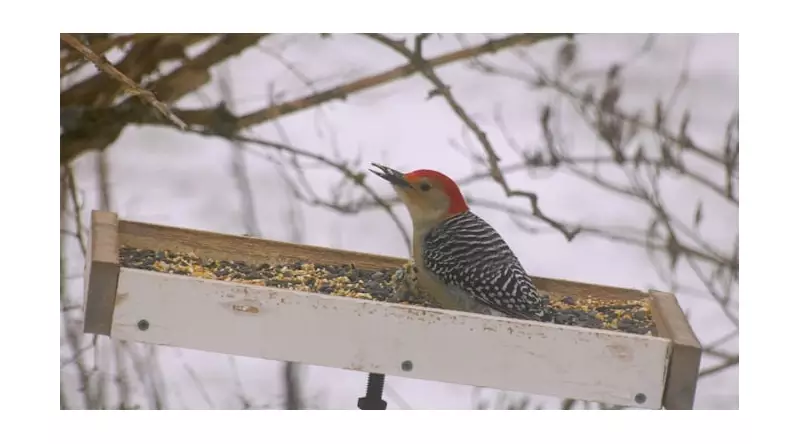
This year, P.E.I. counters were treated to a notable sighting: a red-bellied woodpecker, a species whose range has been gradually expanding northward. Such observations are critical for documenting these distributional shifts, which are often linked to changing winter conditions and food availability. Every single bird recorded, from the most common sparrow to the rarest vagrant, becomes a vital data point.
More Than Just a Bird Walk
The significance of the Christmas Bird Count extends far beyond a single day of birding. The cumulative data from thousands of counts creates a powerful long-term picture. Scientists use this information to assess conservation priorities, identify species in decline, and measure the success of protection efforts. For example, trends documented in these counts have helped signal the alarming decline of aerial insectivores like swallows and flycatchers.
Participation also fosters a deep connection between people and their local environment. It transforms a casual appreciation for birds into active stewardship, educating volunteers about species identification, habitat needs, and the challenges wildlife faces. On P.E.I., where coastal and agricultural landscapes provide critical habitats, understanding avian populations is key to broader ecosystem health.
The dedication of Island birders this holiday season underscores a community commitment to conservation. Their frozen fingers and detailed lists contribute to a global scientific endeavor, proving that citizen science is a powerful tool for protecting the natural world. As the data from P.E.I. is submitted and compiled with counts from across Canada, it will add another essential piece to the puzzle of understanding and safeguarding bird life for future generations.