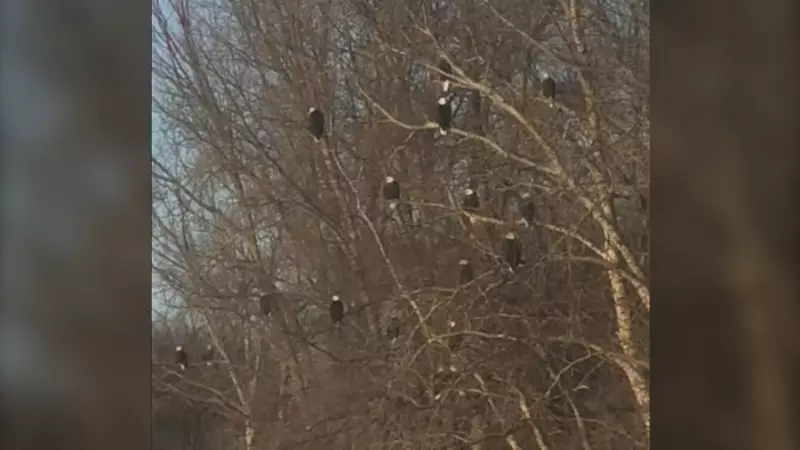
A remarkable wildlife spectacle unfolded in Manitoba as the year 2025 drew to a close, offering a powerful symbol of conservation success. A video captured on December 31 shows an impressive congregation of 55 bald eagles perched in trees on a private property, a sight described by the observer as "really cool."
A Rare and Majestic Gathering
The video, recorded by Gregg Penner, provides a stunning visual document of this unusual gathering. While bald eagles are a more common sight in parts of Canada than in decades past, a single group of this size is exceptional. The footage shows dozens of the iconic birds, with their distinctive white heads and tails contrasting against the winter landscape, settled in bare branches. Such concentrations typically occur in areas with abundant food sources, often near open water where fish are accessible or in regions with significant winter carrion.
Significance of the Sighting
The large number of eagles in one location is a positive indicator for the species' recovery in the region. Once endangered due to pesticide use and habitat loss, the bald eagle has made a significant comeback under legal protection and conservation efforts. Sightings like this one in Manitoba highlight the health of local ecosystems and the availability of prey. The timing of the event, on New Year's Eve, also made it a symbolic natural celebration for wildlife enthusiasts.

Gregg Penner's decision to record and share the video has provided valuable informal data for bird watchers and conservationists alike. It underscores the role citizen scientists can play in documenting wildlife patterns and remarkable natural events. The "really cool" experience, as he put it, translates into public engagement and appreciation for native species and their habitats.
Conservation Context and Eagle Behavior
Bald eagles are known to gather in numbers, especially during winter months when they congregate near unfrozen water bodies. Manitoba, with its numerous lakes and rivers, provides ideal overwintering conditions in some areas. These gatherings are not just random; they are strategic, driven by the need to find food efficiently during the harshest season. Observing 55 individuals together suggests a particularly rich foraging area nearby.
This event serves as a reminder of the importance of protecting natural habitats and water quality. The continued success of bald eagle populations depends on healthy fisheries and undisturbed roosting sites. For Canadians, and particularly Manitobans, the eagle remains a potent national symbol, and its thriving presence is a point of pride and an environmental benchmark.
In conclusion, the video of 55 bald eagles is more than just a "really cool" clip. It is a snapshot of ecological recovery, a testament to successful conservation, and an invitation for the public to observe and respect the wildlife that shares the Canadian landscape. Such encounters enrich our understanding of nature and highlight the ongoing need to protect it for future generations.