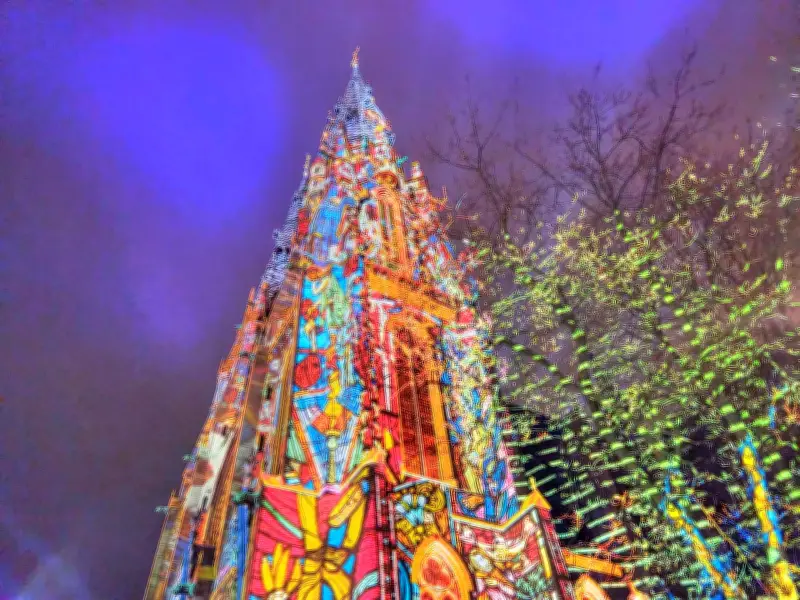
GLOW is an apt name for this Eindhoven, Netherlands initiative, which involves setting up dozens of light artwork stations around town. The installations are strategically dispersed over a five-kilometer walking course that encourages participants to go from one exhibit to the next.
GLOW (gloweindhoven.nl) is also a shining example of an initiative we could replicate here in Canada as a well with just a bit of incentive and imagination, and it would be far more sustainable than the fireworks displays that still dominate holiday celebrations in our country.
Between Victoria Day and Canada Day, our cities budget millions of dollars for fireworks, which literally go up in smoke on their conclusion, polluting the air, frightening wildlife and in some instances, causing fires.

The reality of the cost and unwanted side effects of fireworks is something a growing number of cities are coming to terms with, including Winnipeg, Vancouver and Sudbury; all of which have started down the path of replacing at least some of their fireworks with alternative initiatives such as drone shows.
While drone shows are much quieter and don't pollute the air, they can still disrupt wildlife. In terms of engaging spectators, they're essentially a static, unsocial experience in which attendees typically sit on their own and don't interact with neighbours.
In contrast, GLOW gets people moving. The event, which has no admission cost, actively encourages attendees to go on a walkabout and even offers free guided tours – in both Dutch and English.
What pulls people along is a diverse collection of light artwork stations. For instance, the 2026 event featured everything from multi-coloured patterns projected on local buildings (ranging from historic churches to modern office towers), to illuminated, planet-themed globes, multi-coloured cubic “forests” and Picasso-inspired giant sunflowers – all strategically placed at ground level.
Ronald Ramakers, who retired last year as the GLOW director after a decade at the helm, shares that the festival's social philosophy is for “everyone, from people of different ages to different nationalities and backgrounds… to meet (and) embrace art while your neighbour is doing the same.” The net effect is to foster a greater appreciation for where they live.
Apart from the social aspect, the event also provides a compelling economic return for the city.
The annual budget of two million euros (about three million CDN) is split evenly between the public and private sectors and generates over 25 million euros in spin-off benefits for local stores, restaurants and bars.
Unlike a fireworks exhibition, which lasts minutes, GLOW runs daily from early evening through to 11 p.m. over the course of eight days. Its impact is arguably year-round, with planning for the next event kicking in months before the next one is staged.
There's even a GLOW Academy, where over one hundred students spend months learning how to develop light art for public audiences.
Another ripple effect is that surrounding communities are now setting up their own GLOW installations as a way to encourage participants to gain an even greater appreciation of the area's amenities and attractions.
If asked to name “the city of light,” the standard response most Canadians would give is Paris. For those living in the Netherlands, it would unhesitatingly be Eindhoven. Originally, the city garnished the name as the manufacturer of matches, later as home of the Philips lighting company, and now, of course, because of the GLOW festival.
If there's a takeaway from that historic transition, it's that cities need to continually evolve and reinvent themselves, includes rethinking how we celebrate as a way to bring people together. Of equal importance, is celebrating arts and culture in a way that's both meaningful and sustainable.
Mark Wessel lies in Ridgeway, Ont. and is a passionate advocate for living more sustainably at home in the grater community. Visit www.markdouglaswessel.com.