The City of Calgary is issuing a renewed call for residents to significantly reduce their water consumption as crews work to repair a critical water main break. The municipal goal is to bring daily usage down to 485 million litres to ensure system stability.
Current Usage Exceeds Critical Target
In a Tuesday update provided on January 13, 2026, city officials revealed that Calgarians used approximately 503 million litres of water on Monday. This figure surpasses the sustainable target, highlighting the ongoing need for vigilance. The consumption pressure stems from the continued work on the Bearspaw South feeder main, a major pipeline whose break has left the city's water distribution network in a fragile state.
Sue Henry, Chief of the Calgary Emergency Management Agency (CEMA), emphasized the precarious situation. "Until the feeder main is back in service, the system remains fragile," Henry stated. She expressed gratitude for the public's efforts so far but underscored the continued necessity for action.

Why Conservation Remains Essential
Henry outlined the critical reason behind the push for lower water use: safeguarding essential services. "It is still very important to keep saving water to make sure we have enough supply available for everyone, especially hospitals, care homes and firefighting," she explained. The city calculates that if every person connected to Calgary's water system reduces their personal use by 25 to 30 litres per day, the community can collectively achieve sustainable levels.
Officials have suggested three primary actions for residents to take immediately:
- Flushing toilets only when necessary.
- Taking shorter showers.
- Running washing machines and dishwashers only with full loads.
Pathway to Restoring Normal Service
Before the repaired feeder main can be brought back online, rigorous safety checks are underway. Water samples are being tested to confirm they meet or exceed the drinking water standards mandated by Alberta Health Services and Alberta Environment and Protected Areas. These tests will analyze turbidity (water clarity), residual chlorine levels, and the presence of any harmful bacteria.
Once safety is confirmed, a careful, phased reactivation process will begin. The city will slowly open valves to reconnect the feeder main to the larger distribution network. Subsequently, pumps at the Bearspaw Water Treatment Plant will be activated to move water through the main. City authorities acknowledge this process carries inherent risk, as increased water flow can stress the pipe and its connections, so the system will be closely monitored throughout.
The city has committed to working "as quickly and safely as possible" to return the pipe to service. A stable system is the prerequisite for lifting the current water restrictions. Calgarians are advised to expect continued visibility of city crews and first responders in the area around the feeder main during the return-to-service work.
Traffic Impacts and Local Closures
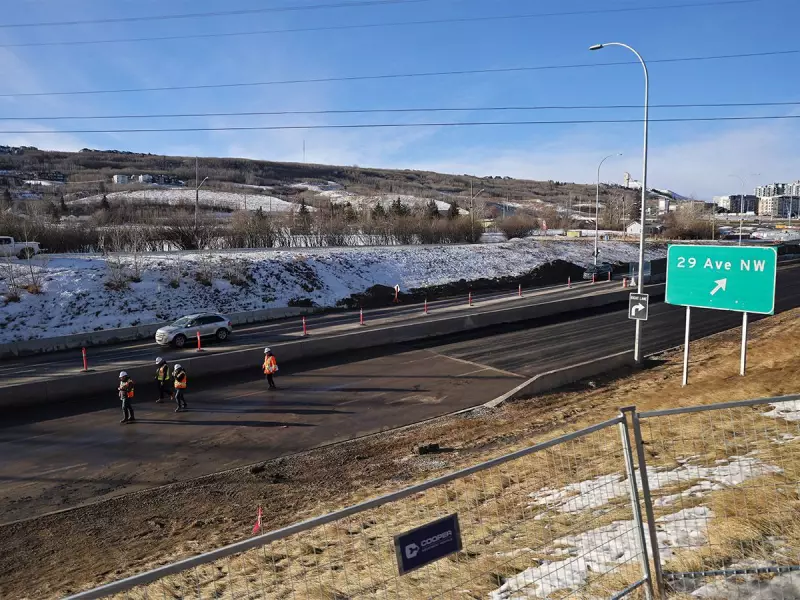
The repair work continues to affect local traffic patterns. As of the latest update, westbound traffic on 16th Avenue N.W. remains closed between 49th Street and Sarcee Trail N.W. However, officials anticipate reopening traffic in both directions of 16th Avenue ahead of the Wednesday morning commute. Residents in Montgomery and Bowness should also prepare for additional short-term closures as Water Services completes the final stages of work to restore the feeder main.