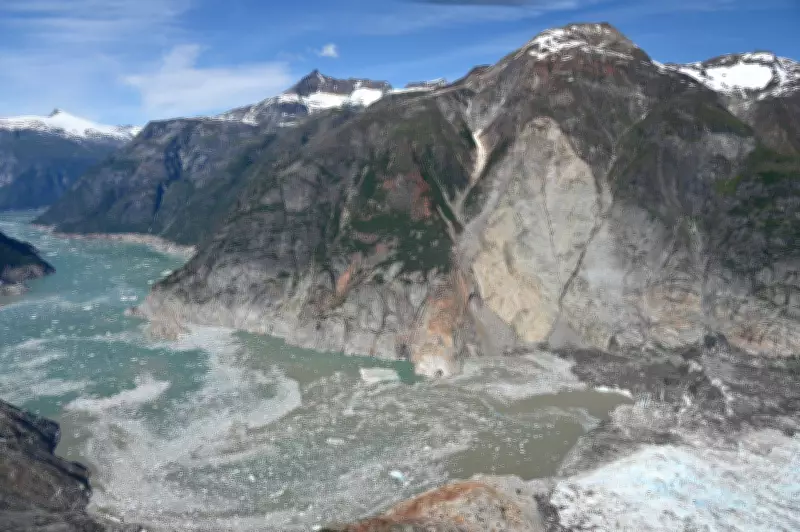
A massive landslide in Alaska last year generated a tsunami as tall as the CN Tower, stripping vegetation from fjord walls and sending a clear warning to British Columbia about the risks of such events in a warming climate.
Landslide and Tsunami Details
The landslide occurred in August 2025 at the terminus of South Sawyer Glacier in Tracy Arm fjord, south of Juneau. An oblique aerial photo released by the U.S. Geological Survey shows the extensive damage, with a trim line along the far side of the fjord where the tsunami stripped the walls of vegetation.
The tsunami, which reached heights comparable to Toronto's CN Tower (553 meters), was triggered by the collapse of a large volume of rock and ice into the water. Such events are becoming more frequent as glaciers retreat and permafrost thaws due to climate change, destabilizing slopes.

Implications for British Columbia
Scientists say the Alaska event serves as a warning for B.C., which has similar fjord landscapes and glacial conditions. The province's coastal communities could face increased risk of landslide-generated tsunamis as warming continues. Monitoring and early warning systems are being evaluated to mitigate potential disasters.
The Canadian Press reported the story on May 6, 2026, highlighting the need for preparedness in regions with steep, glaciated terrain.