Bowen Island Retreat Blends Traditional Wisdom with Modern Sustainability
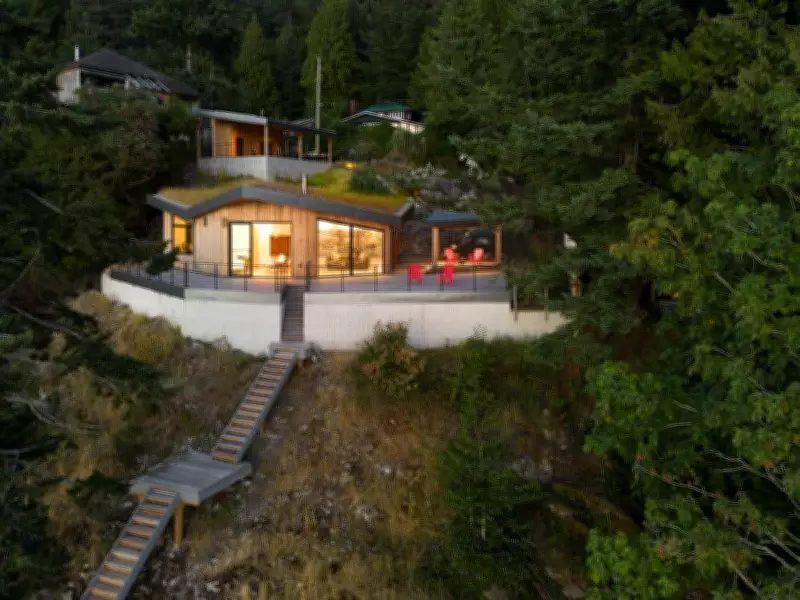
Nestled within a cliffside lot overlooking the ocean on Bowen Island, a custom-built home with a distinctive green roof nearly disappears into the surrounding landscape when viewed from the road above. This 1,000-square-foot, two-bedroom residence, designed by GNAR Inc. and constructed by Alair Homes, was meticulously shaped by the land's natural contours, breathtaking views, and the clients' desire for a secluded escape immersed in nature.
Philosophy of Integration
For Mark Kavanagh, the lead sustainable building designer, this project embodies a core philosophy: buildings should respond sensitively to their site rather than imposing upon it. "It's not just a building that you could take and drop anywhere," Kavanagh explains. "It's a building that reflects the history, topography and shape of the land." This approach guided every aspect of the design, resulting in a structure that appears embedded in the terrain, with low angular rooflines and a large deck made from thermally modified ash positioned on a naturally flat section of the sloped property.
Drawing from Indigenous Traditions
Kavanagh's design process began with a deep study of the site's history. Bowen Island, once a hunting and gathering ground for the Squamish Nation and a neutral meeting point for various Indigenous groups, inspired him to explore traditional structures adapted to the land. One particularly influential example was the pit house—a dwelling partially dug into the ground with an earth-covered roof, built for insulation and protection from the elements.

"I didn't want to just take the roof of a pit house and drop it in," Kavanagh clarifies. "I wanted to use it for the same reason they used it—for privacy and efficient flow of air—and adapt that to the specific site." Rather than replicating its form, he applied its principles to guide the design, ensuring the home respects both its cultural context and environmental setting.
Sustainable Design Features
The home's form emerged organically from the natural slope. "There's this nice naturally occurring flat zone, which then drops off and is super steep again," Kavanagh notes. Carving into this pocket created a usable main level and a generous wraparound deck larger than the house itself, with the surrounding earth providing natural insulation. The split-level plan follows the topography, while the low profile keeps the building discreet from passersby, minimizing visual impact on the scenic view.
Key sustainable elements include:
- Green Roof: Topped with native grasses and maintained by an integrated irrigation system, this feature helps the structure visually recede into the rocky terrain while adding privacy from the street above. "It's only when you get close and look down that you realize that there's something under," Kavanagh observes.
- Energy Efficiency: The nearly off-grid home incorporates rooftop solar panels and triple-paned glazing with double sliding doors by Westeck, which flood the interior with natural light and connect seamlessly to the deck.
- Natural Materials: Inside, high angular ceilings and a soft, muted palette create an airy atmosphere that keeps the focus on ocean and mountain views. The galley-style kitchen, designed for the clients' love of cooking, features a Viking range, quartz countertops, and wood cabinetry by Reynolds Cabinets.
A Personal Sanctuary
For years, the clients envisioned a modest getaway engulfed in nature—a quiet place to unwind with room to host friends and family. The resulting timber home, sunken into the hillside, fulfills this dream by offering a sanctuary that harmonizes with its environment. Intentional use of color in enclosed spaces, such as pops of blue in the ensuite cabinetry and shower tiles, adds brightness to the design without distracting from the natural surroundings.
This Bowen Island retreat stands as a testament to how traditional wisdom and modern sustainability can converge to create a home that not only disappears into the landscape but also enriches the lives of its inhabitants through thoughtful, respectful design.