Northeast U.S. Gripped by Powerful Winter Storm with Widespread Disruptions
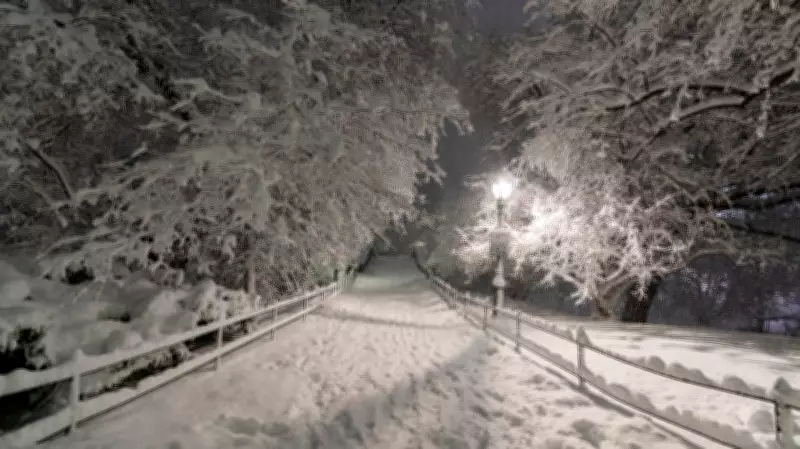
Millions of residents across New York City and the broader northeastern United States found themselves confined to their homes on Monday as a severe winter storm unleashed heavy snowfall and strong winds throughout the densely populated region. Road travel bans and blizzard warnings were implemented, bringing daily life to a virtual halt.
Emergency Measures and Travel Restrictions Enacted
Cellphones in New York City received urgent push alerts on Sunday night, announcing a comprehensive ban on all non-emergency travel on city streets until noon Monday due to "dangerous blizzard conditions." Similar restrictions were put in place in Rhode Island and New Jersey. The storm's impact extended to transportation hubs, with regional airports experiencing widespread cancellations and delays, and public transit services suspended in numerous areas. Even food delivery service DoorDash halted operations in New York City overnight.
New York City Mayor Zohran Mamdani declared a state of emergency and issued the travel ban, which began at 9 p.m. Sunday and was scheduled to end at 12 p.m. Monday. The city anticipated up to a foot of snow, with projections of up to two feet on Long Island and in parts of New Jersey.

Storm Intensifies with Bomb Cyclone Potential
Blizzard warnings extended from Maryland to Maine as snow started falling Sunday. The National Weather Service forecasted 1 to 2 feet (30 to 60 centimeters) of snow in many areas, accompanied by significantly reduced visibility. Officials in several states strongly advised residents to stay indoors.
Emergency declarations were made in New York, Philadelphia, and other cities, as well as in states from Delaware to Massachusetts, with authorities mobilizing readiness efforts. Meteorologist Frank Pereira from the National Weather Service warned that conditions were expected to "rapidly deteriorate" overnight as the storm strengthened and moved northward.
Pereira added that the storm could potentially develop into a bomb cyclone, characterized by a pressure drop of at least 24 millibars within 24 hours. "We're expecting it to drop by that magnitude at least over the course of the next 24 hours," he stated. "I think when all is said and done, it will meet the definition of a bomb cyclone."
Heavy Snowfall and Widespread Closures
The National Weather Service indicated that the heaviest snow was likely to occur overnight, with accumulation rates reaching up to 2 inches (5 centimeters) per hour in some locations before tapering off by Monday afternoon. In response, New York City and Boston canceled public school classes for Monday, while Philadelphia shifted to online learning. Mayor Mamdani referred to it as the "first old-school snow day since 2019" and encouraged children to "stay cozy."
Outreach teams worked diligently to move homeless individuals off the streets and into shelters and warming centers. Numerous landmarks and cultural institutions, including New York's Museum of Modern Art and Arlington National Cemetery in Washington, D.C., announced closures for Monday. Broadway shows were canceled on Sunday evening.
Concerns Over Power Outages and Preparations for Snow Removal
The weather service warned that strong wind gusts could create whiteout conditions and described the storm as a "Potentially Historic/Destructive Storm" southeast of the Boston-Providence corridor. Meteorologist Bryce Williams from the weather service's Boston office expressed concern about the combination of extreme snow amounts and high winds, which could lead to damaged trees and prolonged power outages.
In preparation for major snow clearing, New York City officials not only deployed their plow operations but also recruited additional workers to shovel snow, with some beginning their efforts on Sunday night. John Berlingieri, owner of Berrington Snow Management on Long Island, canceled a family trip to Puerto Rico to focus on the mammoth task of clearing snow from millions of square feet of asphalt around shopping malls and industrial parks. His team spent days preparing equipment, anticipating at least a week of round-the-clock work.

"We're going to work 24 to 36 hours straight, sleep for a few hours and then go back," Berlingieri said, highlighting the extensive efforts required to manage the storm's aftermath.