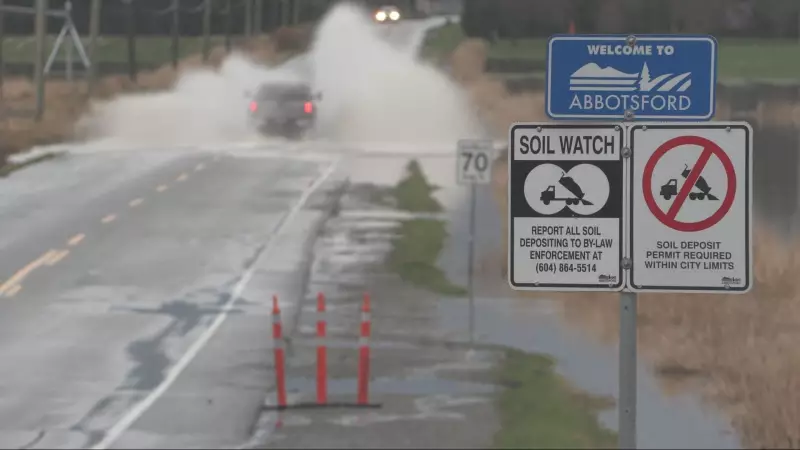
British Columbia's Lower Mainland is bracing for another round of significant rainfall, prompting emergency officials to issue a flood warning and enact proactive highway closures. The situation, developing on the morning of Monday, December 15, 2025, is a direct response to forecasts predicting intense precipitation that could exacerbate already sensitive conditions.
Immediate Threats and Official Response
Environment and Climate Change Canada has issued a "high impact" weather warning for the region, with heavy rains expected to cause further flooding. In response, a specific flood warning has been issued for creeks on the North Shore, including the Seymour River. Authorities are concerned that the anticipated downpour could quickly overwhelm waterways and drainage systems.
Proactively, the Ministry of Transportation has closed several key highways in the Lower Mainland as a safety precaution. These closures are intended to prevent motorists from becoming stranded in floodwaters or facing hazardous driving conditions as the storm intensifies.

Broader Weather Context Across Canada
The severe weather is not isolated to British Columbia. Federal forecasters have placed six provinces and two territories under various weather warnings. These alerts span a wide range of threats, from the blizzards and brutal cold expected in the Prairies and North to the coastal flooding and rain in B.C. This pattern underscores a widespread and active storm system moving across the country.
In the Maritimes, residents are experiencing a snowy and windy start to the week, leading to numerous school closures. Meanwhile, Ontario is grappling with a mix of extreme cold alerts and the aftermath of previous snowfall, which contributed to incidents like an American driver crashing a pickup truck into a snowbank.
Community Impacts and Ongoing Risks
The repeated bouts of severe weather are taking a cumulative toll on communities. In B.C., officials are warning that the ground is saturated from previous storms, meaning new rainfall has a heightened potential to cause flash flooding and landslides. Residents in low-lying areas and near waterways are urged to remain vigilant and follow all instructions from local emergency officials.
The proactive highway closures, while disruptive, reflect lessons learned from previous atmospheric river events that paralyzed transportation networks. The strategy aims to protect both the public and first responders. As the storm system progresses, conditions are expected to remain fluid, with updates on road closures and flood warnings likely throughout the day.