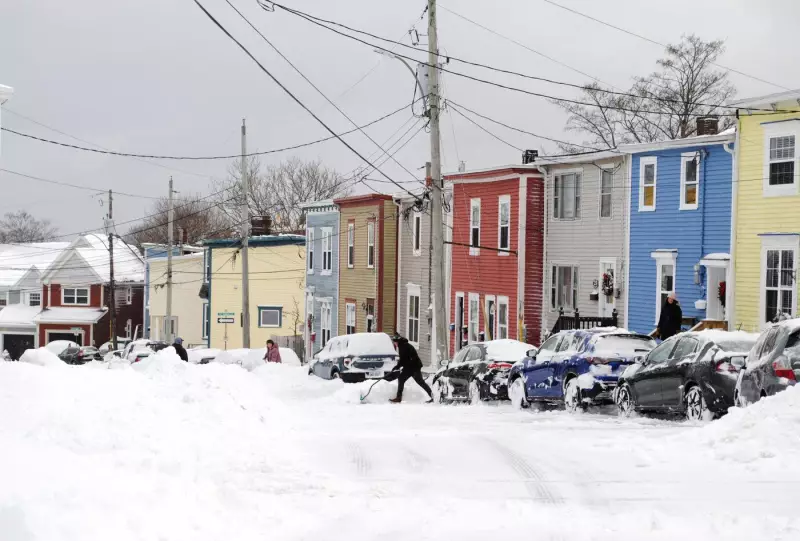
The year 2026 has ushered in its first significant bout of winter weather, bringing Newfoundland and Labrador's capital city to a grinding halt. A powerful storm swept through St. John's on Monday, January 5, 2026, blanketing the region and disrupting daily life for its residents.
A Capital City Brought to a Standstill
The storm, which arrived in the early hours of Monday, deposited approximately 20 centimetres of heavy snow across the St. John's metropolitan area. The relentless snowfall and accompanying winds led to the closure of numerous government offices, businesses, and schools, effectively shutting down a large portion of the city's normal operations. Municipal crews were deployed throughout the day, but the volume of snow made clearing roads and sidewalks a significant challenge.
Residents were faced with the arduous task of digging out from the deep accumulation. Photographs from the day show people across the city bundled up against the cold, working to clear driveways and pathways with shovels in hand. The scene was a classic Newfoundland winter tableau, marking a definitive start to the year's severe weather season.

Navigating the Aftermath and Ongoing Response
The immediate aftermath of the storm focused on restoring access and ensuring public safety. Transportation was severely hampered, with many side streets remaining impassable for hours. The city's priority routes received attention first, but officials urged residents to avoid non-essential travel to allow plows and salt trucks to work efficiently.
Environment Canada had issued warnings ahead of the system's arrival, allowing some preparation time. However, the intensity of the snowfall still managed to surpass initial forecasts in some neighbourhoods. The storm serves as a stark reminder of the region's vulnerability to rapid and severe winter weather events, even with advanced forecasting.
Looking Ahead to the Winter Season
This January 5th storm sets a precedent for what could be an active winter across Atlantic Canada. As the first major event of the calendar year, it tests the readiness of municipal services and the resilience of the local population. For residents of St. John's, the event is a familiar ritual, but no less disruptive each time it occurs.
Meteorologists are advising citizens to stay informed about further weather alerts, as more systems are likely to follow in the coming weeks and months. The successful management of this initial storm will provide valuable insights for civic authorities as they brace for the remainder of the 2026 winter season.