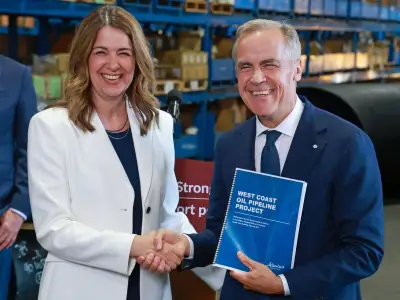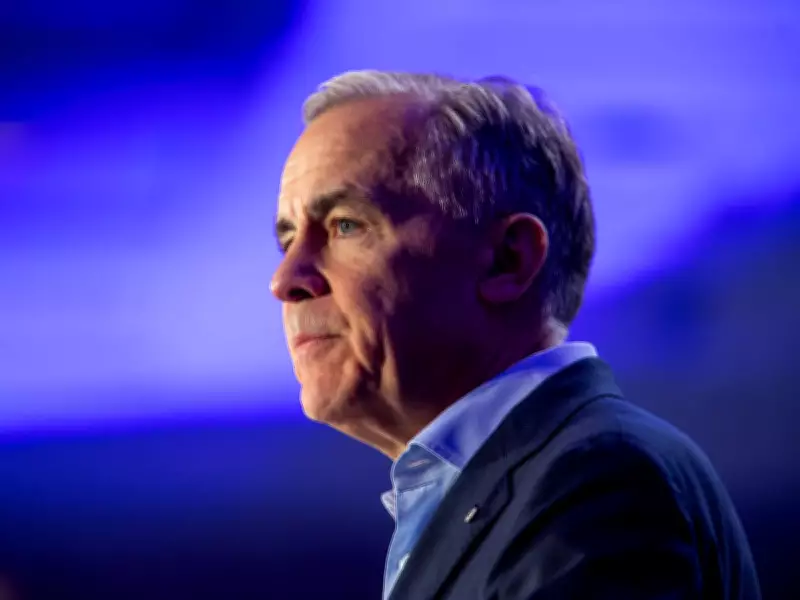
Green activists and their political allies, such as former Liberal environment minister Steven Guilbault, are metaphorically marching on Parliament Hill in response to Prime Minister Mark Carney's undeniable reversal on stringent climate policies. By agreeing to promote pipelines and postponing the $130 per tonne corporate carbon price until 2040, the head of Climate Action Network Canada accused the Prime Minister of 'taking a sledgehammer to one of the last remaining pillars of Canada's climate plan.'
Climate control advocates should become accustomed to falling policy pillars, as scientific pillars are also crumbling, including one that has elevated global warming and carbon emissions to the top of the Canadian political agenda. In 2014, the Intergovernmental Panel on Climate Change (IPCC) published a range of estimates on future climate impacts, including an alarming warning that the planet could experience deadly temperature increases by 2100. This scenario projection, known as RCP8.5, estimated that temperatures could rise by up to 4.5 degrees Celsius above average by the end of the century. If the path to RCP8.5 were not halted, Earth would face a catastrophic climate disaster.
New Research Declares RCP8.5 Implausible
A newly released research paper by the European Geosciences Union, which will form the basis for a new set of IPCC climate scenarios to be published by 2029, concludes that the RCP8.5 scenario is 'implausible' and therefore unusable. The paper states: 'For the 21st century, this range will be smaller than assessed before' and that the high emission levels 'have become implausible, based on trends in the costs of renewables, the emergence of climate policy and recent emission trends.'

This conclusion prompted Roger Pielke Jr., a U.S. climate science policy researcher and critic, to declare that 'RCP8.5 is officially dead,' delivering a serious blow to the climate movement that has used this gloom scenario to stir political anxiety worldwide. Since its launch a decade ago, RCP8.5 has been labeled the 'business as usual' scenario.
Critiques from Researchers
Pielke and Canadian researcher Justin Ritchie have been challenging RCP8.5 for some time. Ritchie, an Adjunct Professor at the University of British Columbia's Institute for Resources, Environment and Sustainability, produced a paper in 2017 that dismissed the doom scenario due to its reliance on an illogical premise that the world would be forced to dramatically expand coal production through to 2100. Ritchie concluded that such coal dependency was 'exceptionally unlikely,' rendering RCP8.5 undependable as a basis for future science research and climate policy.
Neither Ritchie nor Pielke are climate deniers, but they consistently insist on scientific rigor, which they see as lacking in the official climate scenarios produced as part of the United Nations' IPCC science system. Even the original IPCC scenario reports, which covered six emission levels leading to a range of temperature gains between 1.5 and 4 degrees Celsius by 2100, warned that the scenarios 'cannot be treated as a set with consistent internal logic' and that RCP8.5 'cannot be used as a no-climate-policy reference scenario for the other RCPs (Representative Concentration Pathways).'