While there is momentum behind the Alberta-Canada energy pact and the province’s drive to see a major new export pipeline built, a few decisive questions still lurk below the surface.
Route and Pushback
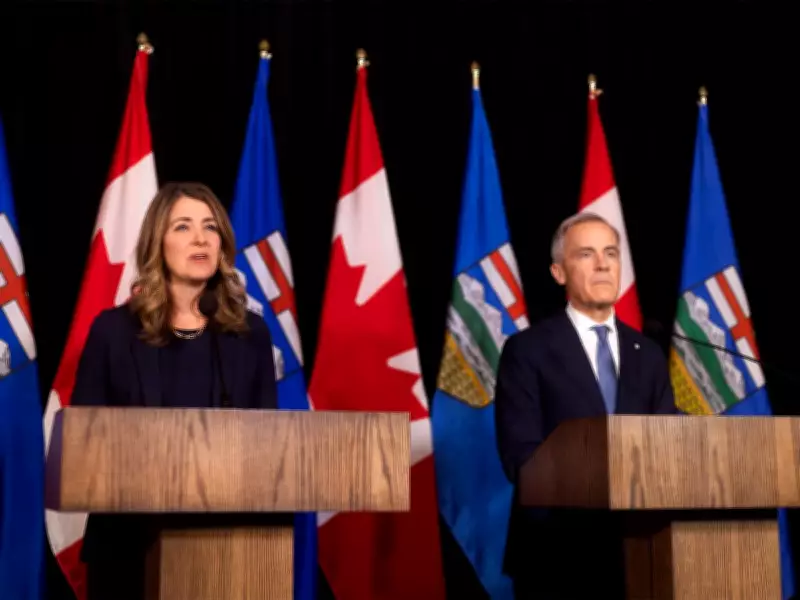
What route will Alberta pitch for a new West Coast pipeline, given the pushback from the British Columbia government against such a project heading to the northern Pacific coast? Premier Danielle Smith indicated Alberta, as the project proponent, is still looking at potential route options, including one to the northern B.C. coast and another that heads south into Roberts Bank in Delta, south of Vancouver. “Increasingly, there are two that are emerging as really tight contenders. So we have to make a choice about whether to submit one or submit two, and work with the federal government on that,” Smith said in an interview after Friday’s announcement. “That decision hasn’t quite been made yet. But there are a couple that look like viable options.” The province previously said it’s looking at routes in the Port of Prince Rupert area. “I think all else being equal, the industry, and probably the provincial government in Alberta, prefer a northern route, just because the deepwater port access is easier” in northern B.C., said Kent Fellows, an energy economist at the University of Calgary’s School of Public Policy.
Carbon Capture Network
Will the Oil Sands Alliance sign on to a large carbon capture network? The federal government has tied approval of a new oil pipeline to the oilsands operators giving the green light to the Pathways decarbonization project. Analyst Menno Hulshof of TD Cowen said Friday’s federal-provincial agreement provides more clarity on an industrial carbon price framework, and more certainty on timing for a proposed West Coast pipeline, leaving a key element — the Pathways project — outstanding. “There are a lot of questions out there,” Hulshof said Wednesday. “We’ve got sort of two of the three legs of the stool, but getting the third leg across the line is going to be very difficult.”

Production and Greenfield Projects
If both developments advance, how can they ensure there’s enough production to fill pipeline developments that would move more barrels west and south — and what would it take to get new greenfield oilsands projects back on the agenda? As part of the deal, Premier Smith said the government wants to apply for a new West Coast bitumen pipeline by the end of June, and then get through federal approval processes by September 2027. Where would such a line run, and could it satisfy the opposition from B.C. Premier David Eby — who on Wednesday called the existing federal tanker ban on the northwest coast “crucially important for British Columbians” — and from some coastal First Nations?
The North Coast of British Columbia near Prince Rupert with a cargo ship in the protected harbour remains a potential terminus, but challenges persist. The article also notes that Saskatchewan is open to talks on industrial carbon tax and 'refining' the deal struck with Alberta. As the situation evolves, industry observers and stakeholders await further clarity on the pipeline route, carbon capture commitments, and the broader implications for Canada's energy sector.