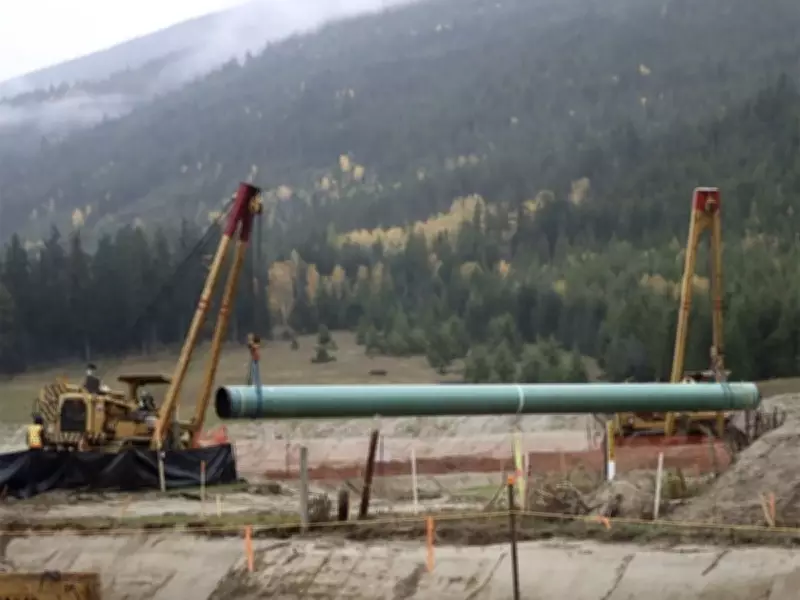
Buried beneath the politics, economics and permitting of Alberta’s push for a new oil pipeline to the Pacific Coast is a basic question: what does it actually take to transport bitumen? To put it crudely, oil moves just a little faster than a light jog. Large, high-strength steel pipelines such as Trans Mountain push millions of barrels of crude oil at six to eight kilometres per hour.
That doesn’t sound terribly fast — and it’s not. For context, record-smashing sprinter Usain Bolt can run more than 40 km/h. Unlike high-octane Olympic events, when it comes to pipelines, the key is how much oil they can ship per day, not necessarily how fast the oil is moving, according to Yong Li, an associate professor of civil and environmental engineering at the University of Alberta.
“Regarding the speed, to be honest with you, we never look at the oil pipeline from this perspective,” Li said.

Rarely Considered Pipeline Questions
The Financial Post, in partnership with the Calgary Herald, sought to answer some of those rarely considered questions about oil pipelines that may not normally make headlines. How do they actually work? Why do they move so slowly? And how do they get around mountains?
On Friday, more than two weeks past their self-imposed deadline, Alberta Premier Danielle Smith and Prime Minister Mark Carney inked a deal that may clear the path for a new bitumen pipeline to the West Coast. Certain conditions still have to be met — Canada’s largest oilsands producers have to sign off on a multibillion-dollar carbon capture project — but last week’s deal marked a significant step forward for the potential project.
How Do Pipelines Navigate Mountains and Rivers?
Under the deal, a new one-million-barrel-per-day pipeline could be operational as early as 2033. Still, crucial details such as the pipeline’s route and a construction start date are yet to be revealed. Some things are clear: any new pipeline would have to traverse the ups and downs of Alberta’s foothills and the Canadian Rockies to reach British Columbia’s coast.
“Sometimes you’ll go right through the hill, depending on the terrain,” Ron Hugo, director of the University of Calgary’s pipeline engineering centre, said in an interview. The pipeline would likely follow valleys through the mountains, much like a highway or existing pipes such as Trans Mountain and Coastal GasLink, Hugo noted.
“Sometimes there are passes that you have to go over, and it would be the same sort of challenge that you’d have with the road system,” Hugo said. “But (pipelines) don’t go straight: they kind of work their way through.”
Boring machines, which can carve holes through solid rock, have improved in recent years. Hugo adds that maintaining pressure in the pipes themselves involves careful calculation during the design phase.