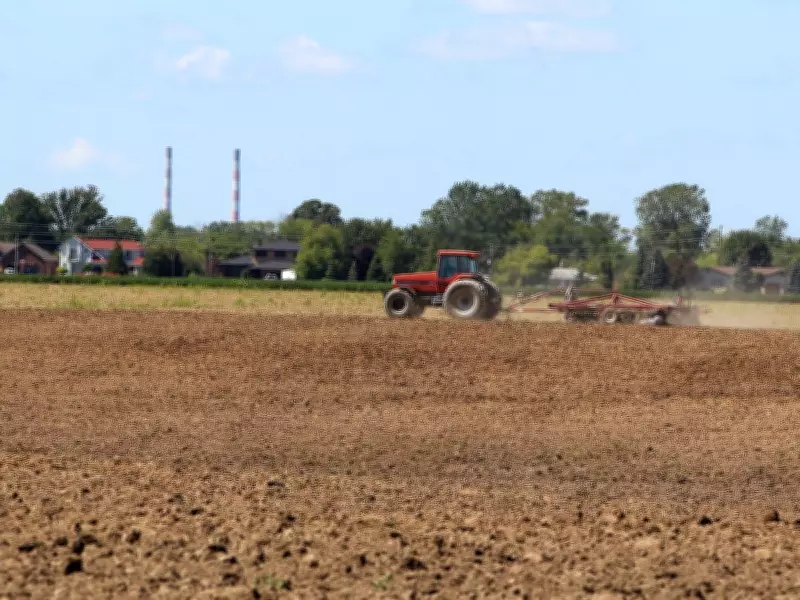
Around Earth Day, it is a good time to reflect on something that does not always get the attention it deserves but underpins everything we do in agriculture: our soils. In Ontario, we are fortunate to have some of the most productive farmland anywhere in the world. That natural advantage allows Ontario farmers to grow and raise more than 200 different commodities, supporting a diverse food system that feeds people here at home and around the world.
Soil Is a Living, Finite Resource
Soil is not just dirt. It is a living, dynamic system that supports crops, stores water, cycles nutrients, and plays a critical role in environmental sustainability. It is also a finite resource. Unlike other assets, we cannot simply replace it or recreate it somewhere else. Once farmland is lost from agriculture, whether to urban expansion or other permanent uses, it is gone for good.
That is why protecting our farmland is fundamental to maintaining our ability to produce food, now and into the future — something the Ontario Federation of Agriculture has long been advocating for.

Food Security as National Security
Food security has become a bigger part of the conversation in recent years, and for good reason. Global instability, supply chain disruptions, and economic uncertainty have all highlighted how important a strong, resilient domestic food system is. Food security is not just about having enough food on store shelves; it is about having the capacity to produce that food in the first place — and increasingly, it is being recognized as a matter of national security.
Recently, Canadian business leader Arlene Dickinson has been speaking out about this connection, pointing to the importance of supporting Canadian production and reducing reliance on external sources for essential goods like food. At the heart of that conversation is farmland — and the soil that makes it productive.
National Attention on Soil Health
That is why it is so nice to see that soil health is gaining attention at the national level. The federal government has committed to developing a National Agricultural Soil Health Strategy, recognizing that healthy soils are critical to long-term sustainability, environmental outcomes, and food production. We also welcome the recent passage of Bill S-230 in the Senate. Championed by Ontario Senator Rob Black, it aims to establish a coordinated, national approach to protecting, conserving, and enhancing soil health nation-wide.
The new federal legislation builds on the Senate's 2024 report on soil, led by Black, which laid out 25 recommendations to better recognize soil as a strategic national asset.
Farmers Lead the Way
Farmers have long understood the importance of soil health. My family and I farm in Binbrook near the city of Hamilton, and just like many farm families across Ontario, we invest time and resources into practices that protect and improve the land. That means rotating crops yearly to maintain soil nutrients and break pest cycles, planting cover crops to keep soil protected and build organic matter between growing seasons; reducing tillage to minimize soil disturbance and prevent erosion; and making sure we handle nutrients like manures and fertilizers responsibly.
These practices not only safeguard the land for future generations but also ensure that Ontario remains a powerhouse of agricultural production. As we look ahead, it is clear that protecting our farmland and soil is not just an agricultural issue — it is a societal priority that touches every aspect of our lives, from the food on our plates to the health of our environment.