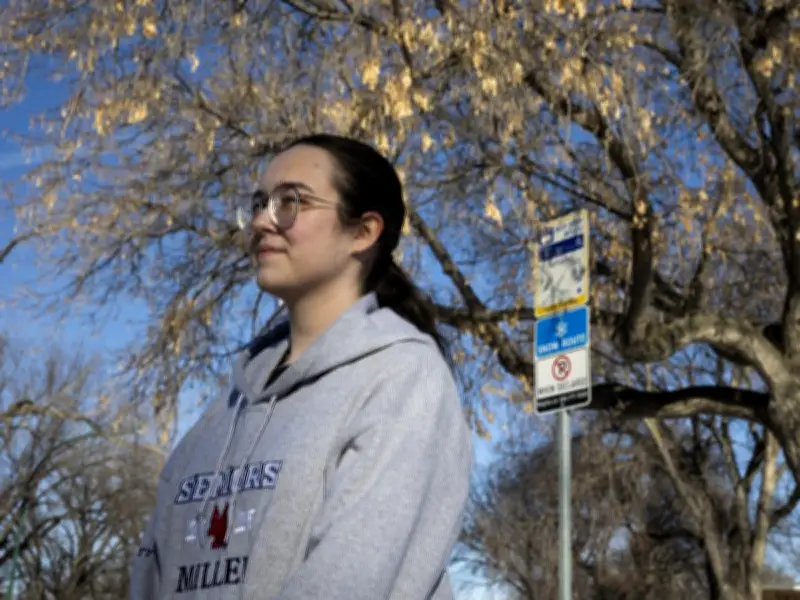
Regina city council's decision to continue testing free transit for high school students is a positive development after five years of advocacy, says Better Bus Youth spokesperson Atticus Kolody-Watt.
“I feel like this is a step towards actual greatness,” Kolody-Watt said after council recently voted 6-5 in favour of resuming a pilot project that was first tested last fall at F.W. Johnson Collegiate. “I’m hoping we can keep working with them to get it for all schools.”
Pilot Extension Approved Amid Cost Concerns
Council’s approval of the extended pilot means the city will continue offering free bus passes at Johnson for the upcoming school year. The plan is to collect more data before deciding whether to make it a city-wide policy.

Ward 8 Coun. Shanon Zachidniak proposed continuing the pilot after some councillors balked last month at a potential $21.1-million cost for implementing the strategy at all high schools. City staff calculated that figure from results of the initial four-month pilot at Johnson. The program offered free bus passes to students between the ages of 13 and 18 from September to December. Kids 13 and under can already ride for free after bus fares were waived in 2022.
“We’ve seen some good success with this project,” Zachidniak said during council’s meeting on June 24. “I would like to continue on with the momentum we have experienced.”
Ridership Surge and Financial Implications
Ridership among Johnson students tripled when fares were free during the pilot, according to the city’s report, and 32 per cent of students continued to ride the bus even after fares were reinstated. Based on that data, city staff estimated it would cost $21.1 million to expand the pilot, mostly because the city would need $16.8 million to buy additional buses to handle the boom in ridership. Operating such a program would cost $2.26 million per year beyond that one-time capital spend.
During the discussion, Ward 4 Coun. Mark Burton said he wasn’t convinced more pilot time was needed. He felt the initial test offered enough insight, and that it showed a minimal impact to school attendance rates — a success measure council asked the pilot to track. “I am not willing to support another pilot that is leading to a $21-million cost,” Burton said.
Further objections from Couns. Clark Bezo and Dan Rashovich were also about the costs and whether continuing the pilot could lead to increasing residents’ taxes to cover the gap in fare revenues.
The initial four-month pilot cost the city $49,000, of which $48,000 was revenue lost from waived fares. Deputy city manager of city operations Kurtis Doney said a full-year pilot would cost approximately $121,500 in waived fares, split between 2026 and 2027.