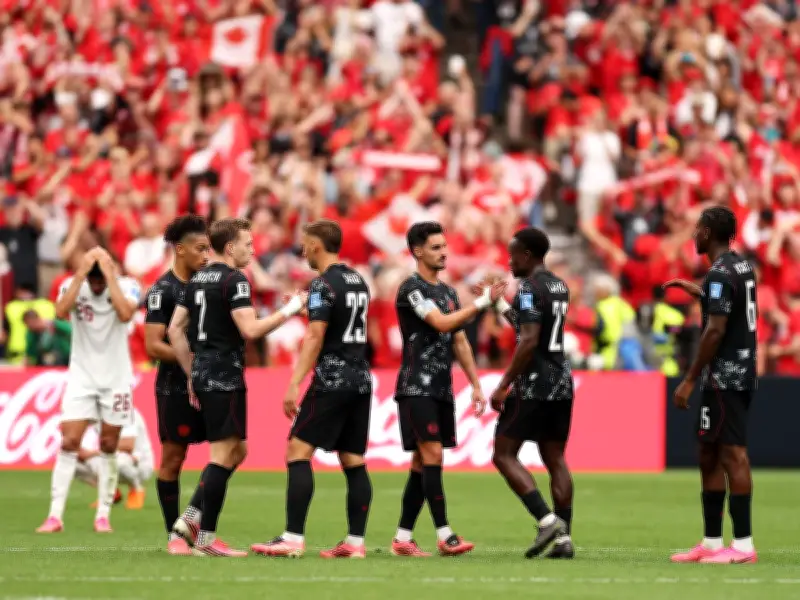
The 2026 World Cup has been a celebration of globalism, demonstrating that liberal internationalism and nationalism are not necessarily in conflict, according to William Watson. The ethnic and racial mix of teams is a tribute to the past half-century of liberal immigration policies in many formerly monochromatic places.
A Tale of Hypocrisy and Birthright Citizenship
Donald Trump faced criticism for leaning on FIFA President Gianni Infantino to overturn the red-card suspension of star U.S. player Folarin Balogun, even as Trump himself tried to end birthright citizenship. Balogun, who spent only the first two months of his life in the U.S., obtained citizenship through birthright after airlines wouldn't let his pregnant mother board a return flight to England in 2001. Watson notes that hypocrisy is common in politics, and living by birthright citizenship rules while trying to change them is not inherently wrong, though Trump is hardly a stickler for following rules.
The incident highlights the intersection of sports and politics, with the World Cup serving as a stage for broader debates about immigration and national identity.

Globalism in Action: Diverse Teams and Player Mobility
The national teams themselves are a tribute to liberal immigration policies. Balogun could have played for England or Nigeria in addition to the U.S., and he previously played for England in under-17 competition. His current professional team is Monaco, where many stars reside for tax reasons. In their professional careers, players operate in a global market. Canada's Alphonso Davies plays for Bayern Munich, while Jonathan David plays for Juventus in Turin. Players naturally want to play for the best teams, and fans want their teams to get the best players regardless of origin. Football is now a highly competitive global market, liberalized in the 1970s in the U.K. and the 1990s in Europe.
According to Reuters, only nine countries in this World Cup fielded players born only at home, including Brazil and Spain. Curaçao had 25 players born outside that tiny island. Cape Verde, which made an astonishing run, taking Argentina to extra time in the round of 32, had 14 players born abroad, the most famous being Roberto "Pico" Lopes, born in Ireland and playing for Shamrock Rovers. Ireland itself not qualifying, many Irish fans transferred loyalty to Cape Verde. Canada had seven players not born in the country, while the U.S. had six.
Neoliberal Enjoyment of the Beautiful Game
For proud neoliberals like Watson, the World Cup offers added enjoyment as a celebration of globalism and a demonstration that liberal internationalism and nationalism are not in conflict. The tournament, often characterized by long periods of passing interspersed with thrilling moments, has seen a generally higher thrill-to-boredom ratio in 2026. The global market for soccer players and teams is the most integrated of any, yet the World Cup shows how much people still love their countries.
Watson concludes that the ethnic and racial diversity of teams is a tribute to the past half-century of liberal immigration policies, reinforcing the idea that globalism and nationalism can coexist beautifully in the world's most popular sport.