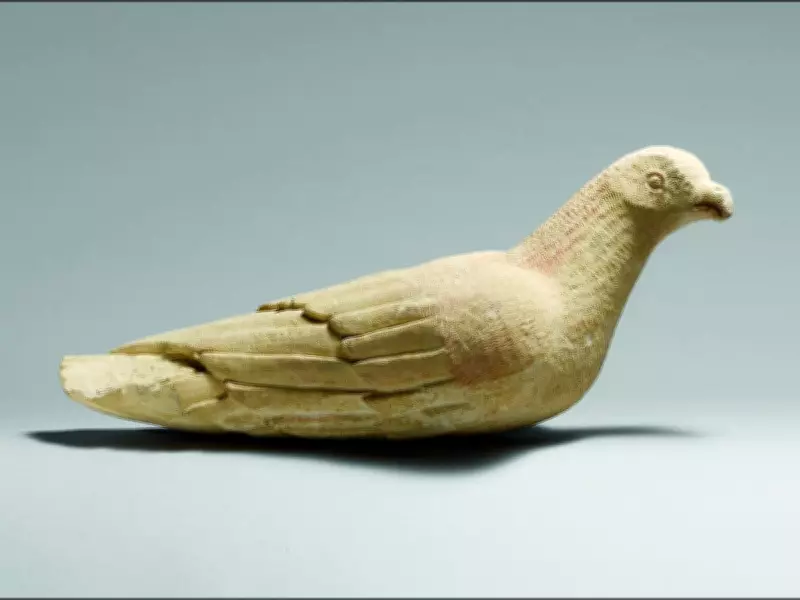
Are pigeons domesticated or wild? This question has intrigued scientists and city dwellers alike. A new study reveals that the relationship between humans and pigeons is far older than previously thought, with evidence from Cyprus pushing back domestication to 1400 BC.
Ancient Pigeon Bones Reveal Human Connection
Researchers from the United States and the Netherlands analyzed over 183 pigeon bones from the Hala Sultan Tekke archaeological site in Cyprus. Of these, 159 were identified as Columba livia, the common pigeon. Using stable isotope analysis, they found that the pigeons' diet overlapped almost exactly with that of contemporary humans, indicating they ate the same food.
This finding suggests that these ancient pigeons were not fully wild but lived in close association with people, consuming a limited and consistent diet typical of managed species. The study, published in the journal Antiquity, pushes back the earliest evidence of pigeon domestication by nearly a millennium.

Semi-Domesticated and Ritualistic Role
The researchers conclude that these pigeons were likely semi-domesticated and may have held symbolic or ritualistic importance. They probably lived in sustained close contact with humans, were bred on site, and consumed during ritual feasting. This challenges the common perception of pigeons as mere urban pests.
Modern Pigeons: Pests or Pets?
Today, pigeons are often seen as nuisances. In Halifax, someone has been poisoning pigeons with laced corn. In Toronto, a contraception program using drugs in feed stations failed to reduce the population. In Brantford, Ontario, authorities had to explain that racing pigeons do not defecate while flying, so local droppings were not from the club.
Despite these conflicts, pigeons remain uniquely adapted to urban life. They do not migrate and thrive on human food, much like their ancient ancestors. The study highlights that the modern pigeon's lifestyle—eating human food while living alongside humans—mirrors that of the Bronze Age birds.
Historical Context
Hala Sultan Tekke, now an important Muslim mosque and mausoleum, was occupied during the Late Bronze Age, a period of great material advancement in the eastern Mediterranean. This era ended with the Bronze Age collapse in the 12th century BC, when societies from Mycenaean Greece to the Hittite Empire disintegrated.
The findings provide new insights into the long history of human-pigeon interactions, showing that our relationship with these birds is both ancient and complex.