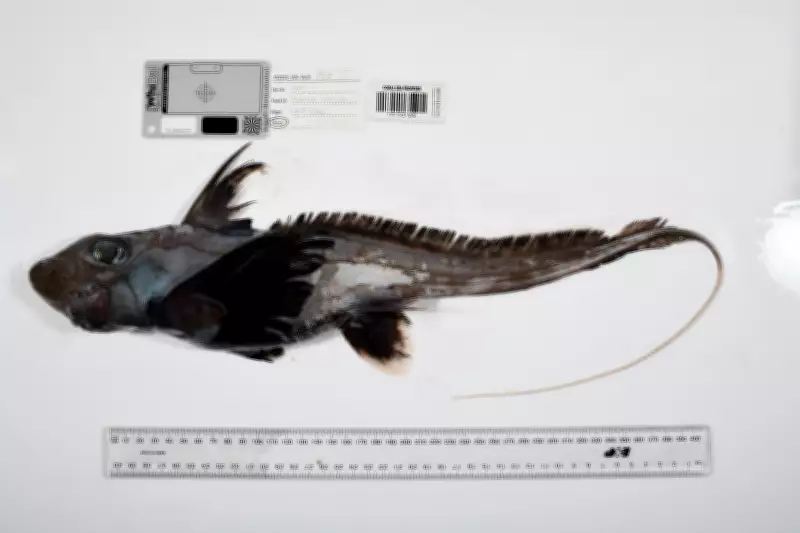
An international team of scientists has discovered more than 1,100 new and unusual ocean species during a recent expedition to the Coral Sea Marine Park, a protected area off the coast of Australia. The findings include a 'ghost shark,' also known as a chimaera, and a sponge referred to as a 'death ball,' among many other previously unknown organisms.
Ghost Sharks: Ancient Relatives of Sharks and Rays
Often called 'ghost sharks,' chimaeras are among the most mysterious inhabitants of the deep ocean. They are distant relatives of sharks and rays, having diverged into a distinct evolutionary lineage nearly 400 million years ago—predating the dinosaurs. CSIRO ichthyologist Dr. William White discovered the new chimaera species during the 2025 Ocean Census expedition, which was conducted in partnership with CSIRO and supported by Parks Australia and Bushblitz.
Expedition Details and Significance
The Ocean Census expedition aimed to document marine life in the Coral Sea Marine Park, a region known for its rich biodiversity. Over the course of several months, researchers used advanced submersibles and sampling equipment to explore depths ranging from shallow reefs to deep-sea trenches. The newly cataloged species include a variety of fish, invertebrates, and microorganisms, many of which exhibit unique adaptations to their extreme environments.

Among the most striking discoveries is the 'death ball' sponge, a deep-sea sponge that forms spherical, ball-like structures. Scientists believe these sponges play a crucial role in filtering water and providing habitat for other organisms. The expedition also uncovered numerous crustaceans, mollusks, and echinoderms, further expanding our understanding of ocean biodiversity.
Implications for Marine Conservation
The discovery of over 1,100 new species underscores the importance of protecting marine ecosystems. The Coral Sea Marine Park, established to safeguard its unique habitats, serves as a vital refuge for deep-sea life. Dr. White emphasized that many of these species are likely endemic to the region and could be threatened by climate change, ocean acidification, and human activities such as fishing and mining.
This expedition is part of a broader global effort, the Ocean Census, which aims to accelerate the discovery and documentation of marine species. Scientists estimate that more than 80% of the ocean remains unexplored, and initiatives like this are critical for filling knowledge gaps and informing conservation strategies.
In addition to the new species, the expedition collected valuable data on water temperature, salinity, and nutrient levels, which will help researchers model the impacts of environmental changes on deep-sea ecosystems. The findings are expected to be published in scientific journals over the coming months.
The Ocean Census team plans further expeditions to other remote ocean regions, including the Southern Ocean and the Pacific's abyssal plains. Each mission aims to uncover new life forms and enhance our understanding of the planet's largest and least-known habitat.