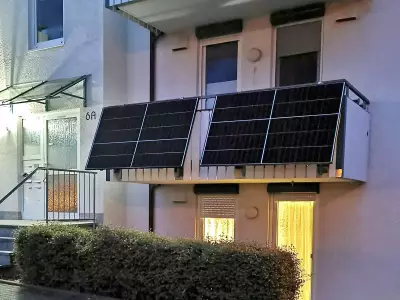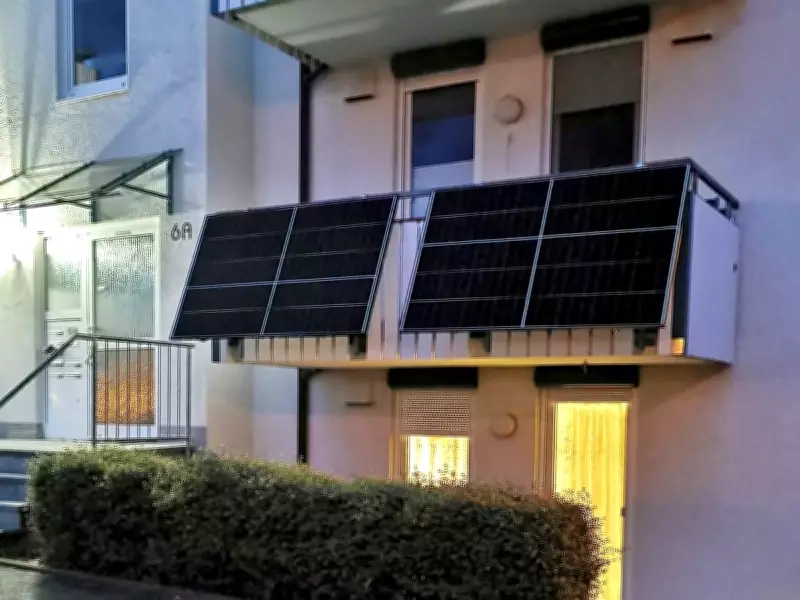
Environmental activists in Alberta are championing the adoption of plug-in, portable balcony solar panels, arguing that the technology is ready for widespread use in the province. However, they face significant regulatory and safety hurdles that are slowing adoption.
Growing Popularity Abroad
Dr. Joe Vipond, co-chair of the Calgary Climate Hub, noted that Germany alone has over one million balcony solar installations. He emphasized that with a more favorable regulatory environment, Canadians could already be benefiting from this technology. 'It’s a win-win and there’s almost no downside,' Vipond said.
How Balcony Solar Works
These micro solar panels are designed for do-it-yourself installation on balconies, porches, or even single-family homes. The generated solar energy passes through a microconverter and plugs into a standard household electrical socket, bypassing the need for professional installation required for rooftop systems.

Prof. Sara Hastings-Simon, an energy scientist at the University of Calgary, highlighted the accessibility benefits. 'It’s much more accessible for people and that’s a good thing. It really opens up the technology to a broader set of people and makes sure people aren’t left behind in the energy transition,' she said.
Benefits and Costs
Proponents claim that an 800-watt kit, costing around $1,500, can supply up to one-third of a household’s energy needs. These systems are also easily transportable if the homeowner moves. Additionally, battery storage options are becoming available to store excess power.
Regulatory and Safety Concerns
Despite the benefits, integrating balcony solar with the existing grid poses challenges. Phil McKay, senior director of member programs with the Canadian Renewable Energy Association (CREA), explained that interactions with household power systems can cause circuit limitations. 'The grid has to wrestle with power going both ways, but the amount generated is so low, it’s like a mosquito in a hurricane,' he said.
Safety concerns include risks of fire, electrical shock, and hazards from falling or windblown components. However, proponents argue that similar risks exist with other balcony items. Utah and several European jurisdictions have successfully addressed these issues, but Canada’s electrical code will not be updated until 2030, delaying certification.
Call for Action
Activists urge Canadian regulators to expedite safety standards and certification to allow balcony solar panels, enabling more households to participate in the energy transition. Without action, they warn that Alberta risks falling behind in adopting this accessible renewable energy technology.