Olympic Skiers Raise Alarm Over Rapid Glacier Melt in the Dolomites
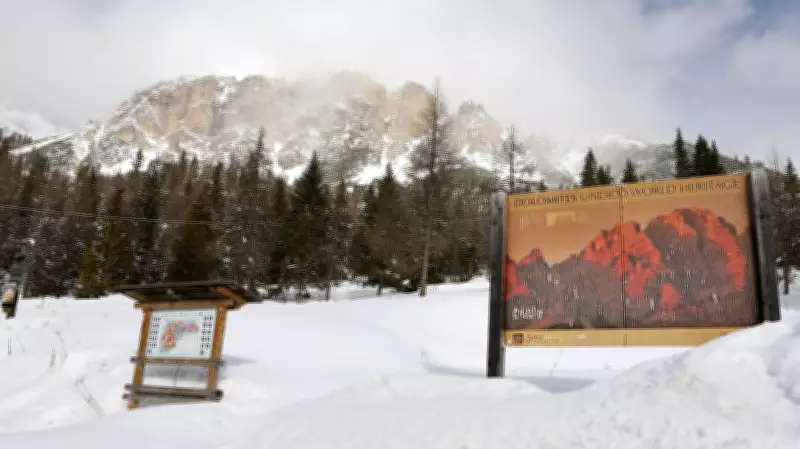
During the Winter Olympics in Cortina d’Ampezzo, Italy, elite skiers including Team USA's Lindsey Vonn and Mikaela Shiffrin, along with Italy's Federica Brignone, have voiced deep concerns about the accelerating disappearance of glaciers worldwide. The host city itself serves as a stark backdrop for these discussions, as glaciers once visible from town have dramatically receded, now reduced to small ice patches high in the jagged peaks of the Dolomites.
Glacier Loss Threatens the Future of Skiing
For professional skiers, glaciers are essential training grounds due to their high-quality snow, but a warming planet puts the sport's future at risk. Vonn, who began skiing on glaciers in Austria at age nine, noted that many of those glaciers are now gone. "Most of the glaciers that I used to ski on are pretty much gone," the 41-year-old said at a press conference in Cortina. "So that’s very real and it’s very apparent to us."
Shiffrin, who recently became the first American skier to win three Alpine gold medals, emphasized that athletes in snow sports have a front-row view of the monumental changes occurring on the world's highest peaks. "It is something that’s very close to our heart, because it is the heart and soul of what we do," she told The Associated Press. "I would really, really like to believe and hope that with strong voices and sort of broader policy changes within companies and governments, there is a hope for a future of our sport. But I think right now, it’s a little bit of a ... it’s a question."

Italy's Glaciers in Steep Decline
Italian glaciologist Antonella Senese reported that Italy has lost over 200 square kilometers of glacier area since the late 1950s, with the reduction accelerating in recent decades. Glaciers near Cortina, such as those on Cristallo and Sorapiss mountains, have shrunk by about one-third since the 1960s. Brignone, who lives in Valle d’Aosta, observed that skiing has changed drastically, with glaciers retreating to higher elevations. "There we have a lot of glaciers, but they are going up and up, every year, more and more," she said, expressing concern not just for skiing but for the planet's future.
To raise awareness, the University of Innsbruck initiated the Goodbye Glaciers Project, highlighting how warming levels affect ice retention. Patrick Schmitt, a doctoral student involved, noted that glaciers like Cristallo and Sorapiss no longer meet the project's volume threshold, underscoring the severity of the loss.
Case Study: The Marmolada Glacier
Approximately 50 kilometers from Cortina, the Marmolada glacier—one of Italy's largest—faces imminent threat. A massive chunk detached in July 2022, causing an avalanche that killed 11 hikers. According to the University of Padua, the glacier has halved in size over 25 years. The Goodbye Glaciers Project predicts it could mostly disappear by 2034 if global warming reaches 2.7°C, but limiting warming to 1.5°C could extend its life and save around 100 Alpine glaciers. "Cutting greenhouse gas emissions now will reduce future ice loss and soften the impacts on people and nature," Schmitt wrote. "The choices we make in this decade will decide how much ice remains in the Dolomites, across the Alps, and around the world."
Global Impact and Athlete Advocacy
Globally, more than 7 trillion tons of ice have been lost since 2000, threatening water sources, increasing mountain hazards, and contributing to sea level rise. This environmental crisis also endangers the Winter Olympics, as the number of viable host locations is projected to shrink. In Cortina, skiers from various nations echoed concerns. Noa Szollos of Israel and Silja Koskinen of Finland noted training challenges due to crevices and reduced snow. Team USA's AJ Hurt described diminishing snow on glaciers in Sölden, Austria, as "hard to ignore."

Norwegian skier Nikolai Schirmer is leading efforts to stop fossil fuel sponsorships in winter sports, while Team USA's River Radamus urged athletes to defend the environment. "It’s always present in our mind that we’re on a dangerous trend unless we do something right," he said. As the Olympics spotlight these issues, skiers are using their platforms to call for urgent action against climate change.