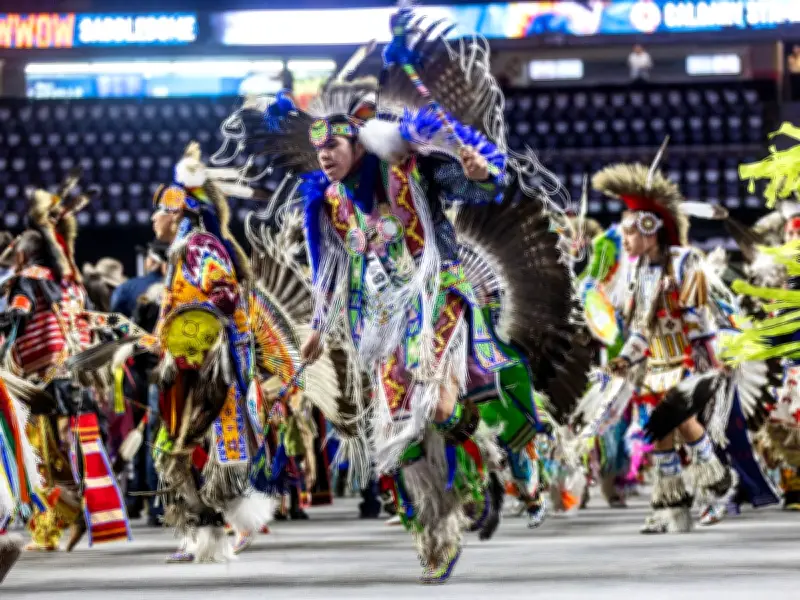
The sound of drums roars from speakers at the Scotiabank Saddledome as teams of Indigenous dancers and drummers from across North America file into the stadium, preparing to compete in this year's Stampede Powwow. An MC runs through a checklist of items, covering registration and seating while counting down the time before the international event begins.
Drummer Reflects on Significance
Trevor Pelletier, a drummer with the Blackfoot A1 Club, sat in a circle with friends and family, beaming and joking. The gravity of the event was not lost on him. “I never thought we would be in a place like this, having a powwow in a stadium like this,” Pelletier said. “This is a big thing. This is our sport.”
For Pelletier, drumming has always been about connecting with his community. “We’ve been practising every week; we bring in our family together, have a meal, sit down, we eat, we sing, you know, the humour comes out, teasing each other,” he said. “Just the camaraderie of us being together, I think that’s what makes this more powerful.”

Pelletier, who grew up in Calgary, was initiated into drumming after his grandmother's death when he saw a cousin commemorate her by drumming. “I heard it, and it was stuck in my mind — I want to learn how to do that,” he recalled. He was 16 at the time. That spark took him around the world, competing in events like the Vancouver Winter Olympics, the Calgary Stampede's Grandstand Show, and cultural exchange events in New Zealand. Now 42, he said drumming has brought out the “best” in him. “By listening to the songs, by dancing, feeling good, getting in shape, being healthy, eating healthy, having a better train of thought, you know, teaching my kids respect, kindness, how to love one another,” he said.
Hundreds to Compete
More than 800 dancers and eight drum groups are performing in this year's Indigenous competition, organized by the 26 families who are holders of tipis dating to the earliest days of the Calgary Stampede. The organizing committee received many more applications, which were whittled down based on experience and community reputation, according to Astokomii Smith, an administrative assistant to the organizers. “It was definitely a tough decision because there are so many talented people, but we try to choose people who are respectful and knowledgeable, and know how to run a good show,” Smith said.
Pelletier noted the pride of reflecting Indigenous values on an international stage. “I think Guy Weadick, in 1912, when he made the Stampede, this is what he would have envisioned — a big contest — he always wanted things on a big scale,” he said.