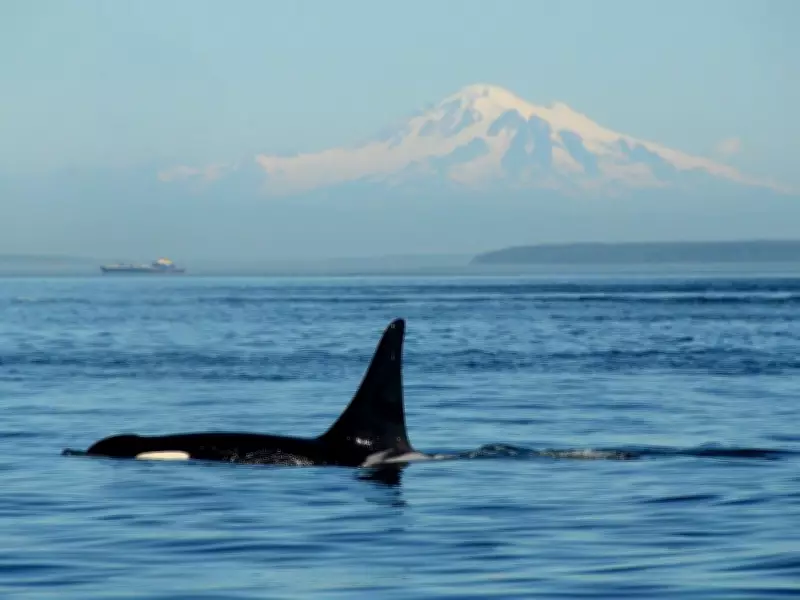
Cross-Border Collaboration for Southern Resident Killer Whale Protection
As Vancouver and Seattle prominently feature orcas in their branding and storytelling ahead of upcoming FIFA World Cup matches, a critical parallel narrative is unfolding. Both Canada and the United States are demonstrating through concrete actions that they are jointly committed to protecting the endangered southern resident killer whale population. The future of these iconic marine mammals—whether it trends toward recovery or continued decline—hinges directly on the collaborative decisions being made right now by British Columbia and Washington state.
Shared Stewardship in Transboundary Waters
While international attention recently celebrated the landmark High Seas Treaty to protect marine biodiversity beyond national boundaries, significant progress is also occurring much closer to home in the Salish Sea. Protecting southern resident killer whales has never been the responsibility of a single agency or nation. This work fundamentally requires trust, coordination, and shared stewardship across borders. Throughout the Salish Sea region, scientists, government agencies, Indigenous Nations, non-governmental organizations, and local communities have consistently united to address this urgent conservation challenge.
Reducing Underwater Noise Through Industry Partnership
One of the most pressing shared priorities has been mitigating underwater noise pollution, a major threat to southern resident killer whales that rely on echolocation to hunt for food and communicate. In British Columbia, the Enhancing Cetacean Habitat and Observation program has successfully brought together shipping companies, port authorities, scientists, and government representatives to test voluntary vessel slowdowns and other noise-quieting measures. Similarly, Washington state launched its Quiet Sound initiative using an analogous collaborative model.

Results from both jurisdictions clearly demonstrate that vessel slowdowns significantly reduce underwater noise levels in critical whale habitats. These programs collectively showcase what becomes possible when industrial and conservation interests work as genuine partners toward common environmental goals.
Policy Alignment and Regulatory Progress
Policy development is increasingly catching up with scientific understanding. Washington state recently strengthened regulations requiring greater distances between vessels and whales—applying these rules not just to whale-watching boats but to all vessels operating in whale habitats. While Canada has not yet fully mirrored all aspects of this regulatory approach, Washington's protective measures serve as an important model for cross-border policy alignment. Constructive discussions are currently underway to implement similar protective frameworks in Canadian waters.
Technology and Community Engagement
Canadian commercial vessel operators are now required to report sightings of killer whales in southern British Columbia waters using the Ocean Wise Whale Report application. These real-time alerts enable mariners to slow down or alter their course promptly, thereby reducing risks of vessel strikes and behavioral disturbance—benefiting all whale populations. On both sides of the border, the Be Whale Wise guidelines continue to raise awareness among recreational boaters, another crucial stakeholder group since small vessels collectively contribute substantial noise and disturbance in whale habitats.
Data Sharing and Health Monitoring
For decades, researchers from universities, government agencies, Tribes, First Nations, and non-governmental organizations have amassed extensive data on whale movements, health indicators, prey availability, and vessel interactions. A recently established southern resident killer whale health database will finally provide a shared, accessible system containing health information for each individual whale, enhancing collaborative research and management efforts.

Cultural Significance and Indigenous Leadership
These whales represent far more than just iconic symbols of the Salish Sea—they are living connections to place, culture, and history. In both British Columbia and Washington, First Nations and Tribes maintain long-held, profound relationships with these whales, recognizing them as kin, teachers, and vital indicators of overall ocean health. Their traditional knowledge and leadership continue to inform and strengthen contemporary conservation strategies.
The story of southern resident killer whales remains actively in progress, written daily through transboundary cooperation, scientific innovation, and shared commitment to preserving these remarkable creatures for future generations.