Trump's Super Bowl Criticism of Bad Bunny Sparks Debate Over Spanish in America
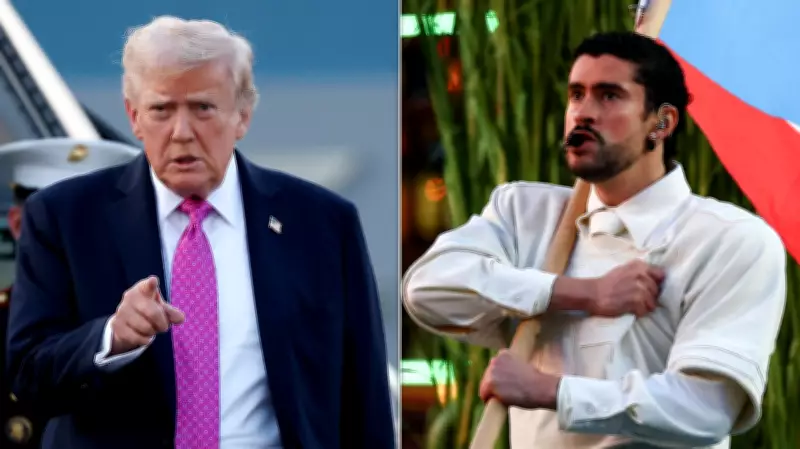
Immediately following Bad Bunny's groundbreaking Super Bowl halftime performance, former President Donald Trump took to Truth Social to launch a scathing critique. He labeled the Puerto Rican superstar's show as "disgusting," a "slap in the face," and "an affront to the greatness of America." However, one of Trump's central complaints has been widely challenged as factually incorrect.
The 'Nobody Understands' Claim Confronts Demographic Reality
"Nobody understands a word this guy is saying," Trump wrote in his post. This assertion stands in stark contrast to demographic data. With approximately 41 million Spanish-speaking Americans in the United States and around 500 million Spanish speakers globally, Trump's statement faces significant factual challenges.
Damián Wilson, a professor of Spanish at the University of New Mexico, argues that such rhetoric does more than simply misspeak. "If the President is saying 'nobody,' it's excluding all the Spanish speakers in our country, and erasing them," he explained. "This is not just inaccurate—it actively diminishes entire communities."

A History of English-Only Rhetoric Translating to Policy
Trump's comments reflect a longstanding perspective he has voiced regarding language in America. Back in 2015, he stated, "This is a country where we speak English, not Spanish," despite the reality that approximately 350 languages are spoken throughout the nation.
This English-only viewpoint has extended beyond rhetoric into tangible policy. During his presidency, Trump signed an executive order designating English as the official language of the United States. Furthermore, under his administration's deportation agenda, reports indicated that federal immigration agents were profiling individuals with Spanish accents and demanding proof of citizenship.
Scholars Connect Criticism to Broader Patterns of Exclusion
Petra Rivera-Rideau, an associate professor of American Studies at Wellesley College and co-author of "P FKN R: How Bad Bunny Became the Global Voice of Puerto Rican Resistance," contextualizes Trump's remarks within a larger framework. "When Trump states that 'nobody' understands Bad Bunny, he is doubling down on the ideology and rhetoric that we already know is coming out of this administration and its allies," she said. "That rhetoric demonizes Latinos and immigrants, presenting them as foreign threats to the United States."
Rivera-Rideau emphasizes that the backlash against Spanish at the Super Bowl transcends Bad Bunny personally and predates Trump. "There is a very long history in the United States of using Spanish as a symbol of a potential foreign takeover," she noted.
Historical Precedents of Linguistic Backlash at Sporting Events
This incident is not the first time a Spanish-language performer at a major U.S. sporting event has faced accusations of being unpatriotic. In 1968, Puerto Rican artist José Feliciano performed the national anthem in English with Latin-tinged guitar at the World Series, shortly after winning a Grammy. The criticism he endured was remarkably similar to contemporary reactions, with accusations that "He is a foreigner" and "He doesn't belong."
More recently, in the midst of anti-deportation protests, Latina R&B musician Nezza reported that the Los Angeles Dodgers advised her not to sing the Spanish version of the "Star-Spangled Banner" for a team game. She performed it regardless.
Bad Bunny's Performance as Political Resistance
Against this backdrop, Bad Bunny's halftime show—featuring salsa and reggaeton with distinctly Puerto Rican Spanish lyrics—becomes more than entertainment. It emerges as a political act of resistance against narrow-minded conceptions of how Americans should sound.
Rivera-Rideau observed that the show masterfully balanced universal appeal with specific cultural messages. "That whole halftime show spoke to everyone, and then also had messages that were just for Spanish-speaking Latinos, too, or for people who are in the know," she said.

During the performance, Bad Bunny looked directly into the camera and delivered a personal message in Spanish, encouraging self-belief. "By saying that in Spanish, he's speaking to a group of people that is being subject to these racist and xenophobic attacks," Rivera-Rideau explained. "I think that's really important."
Challenging the 'Make America Great Again' Narrative
In his Truth Social post, Trump criticized Bad Bunny for lacking creativity, excellence, or success, concluding with "MAKE AMERICA GREAT AGAIN!" This invocation of the MAGA slogan to critique the performer has also drawn scholarly rebuttal.
Ileana Pérez, a Ph.D. candidate in Hispanic linguistics at Ohio State University, clarifies a fundamental geographical point. "America is not the United States. The United States is part of America," she stated.
Bad Bunny subtly highlighted this distinction by saying "God bless America" in English and then listing numerous countries across the Americas, including Chile, El Salvador, the United States, and Canada. "He reminded us that it's a continent, and it's composed of a lot of countries," Pérez said. "[The] United States is just one portion of it. It's not the whole thing. And so to keep saying 'Make America Great Again' is ridiculous because it's composed of all these different regions, and it's already great."
A Future Where Spanish Thrives in the United States
Despite political efforts to limit the prominence of Spanish, demographic projections tell a different story. Researchers estimate that by 2060, the United States will become the second-largest Spanish-speaking nation in the world, trailing only Mexico.
Bad Bunny's finale powerfully acknowledged this evolving reality. After listing American countries, he concluded with the Spanish phrase "Seguimos aquí," which translates to "We're still here." He then spiked a football inscribed with the English message: "Together We Are America."
The Profound Meaning Behind 'Seguimos Aquí'
To Rivera-Rideau, this closing statement carries deep significance. "Seguimos aquí" references a short film created for Bad Bunny's album "Debí Tirar Más Fotos," where an older Puerto Rican man faces challenges at a gentrified bakery. Another Puerto Rican man assists him, uttering the same phrase.
In that context, "Seguimos aquí" signifies "We are persevering. We are still here. We are still on our land in the face of this profound wave of gentrification and displacement." By delivering this phrase on the global Super Bowl stage, Bad Bunny extends its meaning to encompass the resilience of Spanish speakers, Latines, and immigrants across the United States.
"You can try to say that the very essence of being a Spanish-speaking Puerto Rican person is antithetical to American values, but we're here," Rivera-Rideau affirmed. "We're valuable. We contribute to this country, and we're an essential part of the fabric of the United States. And we're not going anywhere."