London's Weather Reverts to Seasonal Norms After Mild Interlude
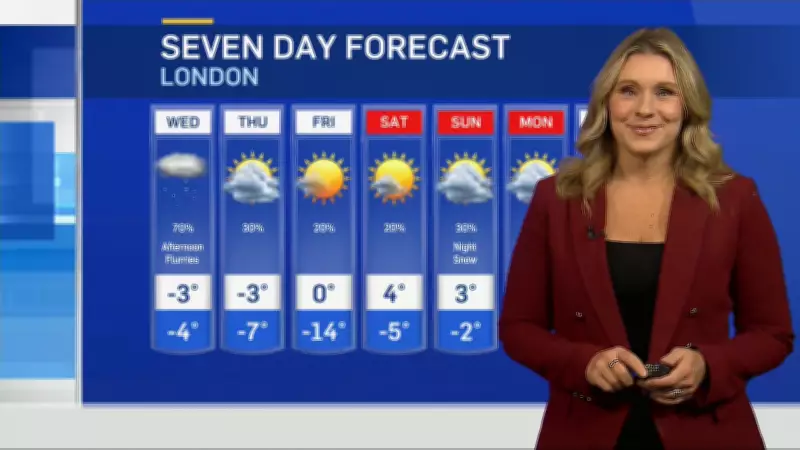
Residents of London, Ontario, can expect a return to more typical February conditions as temperatures stabilize around seasonal averages following a stretch of unusually mild weather. The shift marks a departure from the recent springlike warmth that has characterized the early part of the month.
Forecast Details and Meteorological Analysis
According to the latest meteorological data, there is a possibility of light flurries in the London area as cooler air masses move in. CTV's chief meteorologist, Julie Atchison, has provided a comprehensive breakdown of the upcoming weather patterns, emphasizing the transition back to standard winter conditions.
This temperature adjustment aligns with historical climate patterns for southwestern Ontario in mid-February, where average highs typically range between -1°C and 3°C. The recent anomalous warmth, which saw temperatures climbing well above these norms, was an exception rather than the rule for this time of year.

Broader Weather Context Across Canada
While London experiences this seasonal correction, other regions are grappling with distinct weather phenomena. The Maritimes, for instance, are under a special weather statement anticipating significant snowfall on Wednesday. Meanwhile, Calgary continues to enjoy sunny skies with daytime highs reaching between 6°C and 11°C, showcasing the diverse climatic conditions across the nation.
This return to seasonal weather serves as a reminder that winter's grip has not fully loosened, despite the temporary reprieve. Environment Canada advises residents to stay updated on local forecasts as conditions can shift rapidly during this transitional period.
Implications for Daily Life and Preparedness
The normalization of temperatures necessitates a recalibration of daily routines and preparedness measures. Commuters should anticipate potential minor disruptions if flurries materialize, and households might see a slight increase in heating demands compared to the preceding mild days.
Meteorologists note that such fluctuations are not uncommon in Canadian winters, where polar air masses and milder systems often engage in a tug-of-war. The current pattern suggests a reassertion of more characteristic winter conditions as we move deeper into February.