For half a century, a quirky tradition at a Michigan university has called out the words and phrases that have worn out their welcome. The latest edition has spoken, and the verdict is in: the enigmatic slang term "6-7" is officially "cooked." These expressions lead the 50th annual Banished Words List from Lake Superior State University (LSSU), a lighthearted yet pointed critique of linguistic trends that have become tiresome or misused.
The 2025 List of Linguistic Offenders
Released to coincide with the new year, the 2025 list compiles the top suggestions from approximately 1,400 submissions sent in from all 50 U.S. states and several other nations, including Uzbekistan, Brazil, and Japan. What began as a playful idea at a 1976 New Year's Eve party has evolved into a beloved institution, officially dubbed the list of "Queen's English for Mis-use, Over-use and General Uselessness."
Joining "6-7" and "cooked" in the top ten are words like "demure," "incentivize," "perfect," "gift/gifted," "my bad," and "reach out." Notably, "my bad" and "reach out" are repeat offenders, having also been banished in 1998 and 1994, respectively, proving some slang has serious staying power.

Decoding the Nonsense: Why '6-7' Topped the List
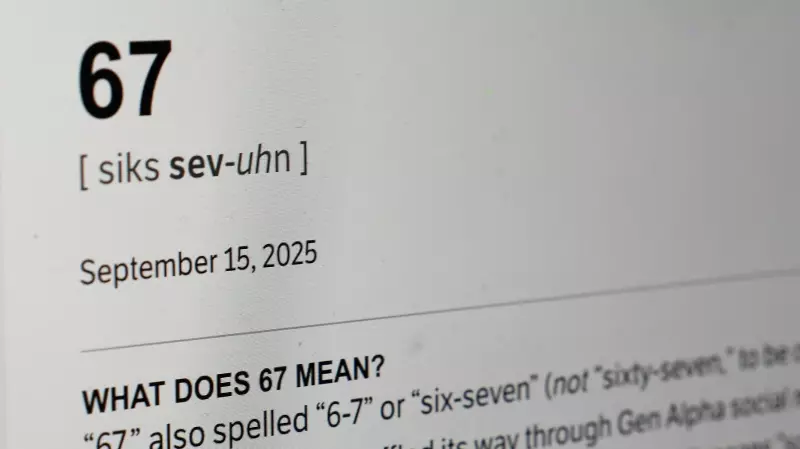
Few terms defined the linguistic confusion of 2025 for anyone over 40 quite like "6-7." It exploded in popularity over the summer, particularly among Gen Z, and is often described as a meaninglessly fun inside joke propagated by social media. Dictionary.com even named it their 2025 Word of the Year, while other lexicons selected terms like "slop" and "rage bait."
"Don't worry, because we're all still trying to figure out exactly what it means," the dictionary's editors admitted. It can be said aloud as "six, seven," or even combined as the number 67—a point total that sparks cheers at some college basketball games. Its placement at the pinnacle of the banished list grants it a peculiar honour, following in the footsteps of past top picks like "quid pro quo" in 2019 and "fake news" in 2017.
David Travis, President of Lake Superior State University, notes the list reflects generational vernacular trends. "Social media allows a greater opportunity to misunderstand or misuse words," Travis observed. "We're using terms that are shared through texting, primarily, or through posting with no body language or tone context. It's very easy to misunderstand these words."
To Ban or Not to Ban? The Public Weighs In
Reactions to the listed terms, especially "6-7," are mixed among the very generation that popularized them. Alana Bobbitt, a 19-year-old sophomore at the University of Michigan, remains an unapologetic user. "I find joy in it," Bobbitt said. "It's a little bit silly, and even though I don't understand what it means, it's fun to use."
Conversely, Jalen Brezzell, a 19-year-old at the University of Michigan-Dearborn, avoids it. "Never. I don't really get the joke," he stated, though he admitted to using other listed words like "cooked," which he defines as saying, "give it up, it's over." He questioned the idea of banning words in jest, even as he participates in the tradition.
President Travis predicts a split fate for the listed terms. While some, like "at the end of the day" or "my bad" (which he used himself recently), "will stick around in perpetuity," others are fleeting. His forecast for the list-topper? "I think '6-7,' next year, will be gone." Whether it fades into obscurity or evolves remains to be seen, but for now, according to the judges of Lake Superior State, its time in the spotlight is thoroughly cooked.