Massive Student Protests Erupt in Montreal Over Quebec Government's Education Funding Cuts
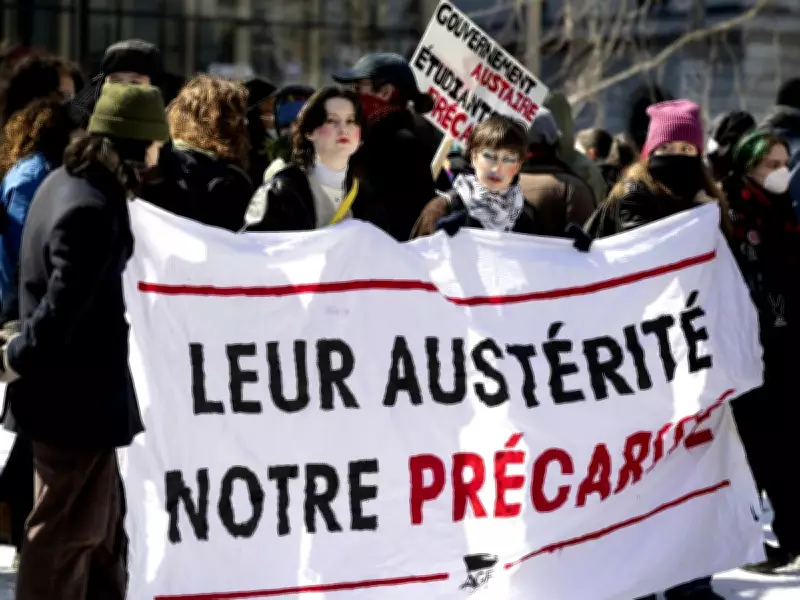
More than 1,000 striking post-secondary students flooded the streets of downtown Montreal on Friday, March 27, 2026, in a powerful demonstration against the Quebec government's recent slashing of financial assistance programs. The protesters demanded immediate restoration of funding and increased financial support for CEGEPs and universities across the province.
Province-Wide Strike Movement
The Montreal demonstration represented just one facet of a much larger weeklong strike involving more than 65,000 students throughout Quebec. Organized by the student union Coalition de résistance pour l'unité étudiante syndicale (CRUES), the protests specifically target the provincial government's decision to cut student financial aid by $25 million in the 2026-2027 budget.
"It's going to become increasingly inaccessible. Only the most privileged people will have access to education. Is that really what the government wants?" warned Elki Mercier, a spokesperson for CRUES. Mercier, a first-year student at l'Université du Québec à Montréal, relies on loans to finance her education and expressed concerns shared by many protesters about the practical implications of the cuts.

Historical Symbolism and Contemporary Concerns
Protesters gathered at Dorchester Square around 1 p.m. before marching east along René-Lévesque Boulevard and turning onto Robert-Bourassa Boulevard. Many participants wore red felt squares pinned to their jackets and bags, a symbolic gesture inspired by the red square used during the 2012 Maple Spring student strikes.
"I think it's a colour that in the history of Quebec student movements has a lot of meaning," explained protester Nour El-Hage from Cégep de Saint-Laurent, highlighting the continuity of student activism in the province.
Broader Educational Context
The financial aid reductions represent the latest in a series of controversial education policies implemented by the Legault government. Previous measures include a cap on international student admissions and a 33-percent tuition increase for out-of-province students, both of which have contributed to declining enrollment numbers across Quebec's higher education institutions.
Teachers from Dawson College joined the student protesters, adding their voices to the growing chorus of opposition. "The social costs of these cuts are going to be greater than any savings they could possibly justify," warned one educator, emphasizing the broader societal implications of reduced educational funding.
Personal and Institutional Impacts
Emilie Richer, who teaches in Dawson College's mathematics department, described the tangible consequences already being felt: "The budget cuts have decimated a large part of our school. We've lost employees. We've lost jobs. We have trouble keeping our staff."
Fellow Dawson teacher Antonia Fikkert expressed deeper concerns about the long-term effects on Quebec's social fabric and critical thinking capacity: "We're really, really worried about the ability of our population in the future to think critically about the government, to live in a society that's diverse, multicultural. To be smart and critical about AI, about all of these challenges around the world. The government is completely emaciating our ability to do that."
Student Financial Realities
For many students like Mercier, the financial aid cuts create impossible choices in daily life. "Often, that's not enough to feed myself — and for many students, it often means having to choose between housing and food," she explained, highlighting the practical hardships facing those pursuing higher education under increasingly constrained financial circumstances.
The protest movement shows no signs of abating as students, educators, and supporters continue to mobilize against what they perceive as a systematic undermining of accessible education in Quebec.