An American Perspective from Montreal: Witnessing a Homeland in Crisis
For Jacob Wesoky, a political science student at McGill University, the current moment presents a surreal and distressing reality. Having left the United States in the fall of 2022 to pursue his education in Montreal, he arrived with a sense that American democracy, while wounded, was on a path to recovery. More than a year had passed since the January 6th insurrection, and there was a prevailing hope that the nation was ready to move beyond the era of Donald Trump.
Instead, from his vantage point in Canada, Wesoky has watched as that hope disintegrated. Now, in his final semester, he observes what he describes as a "full-blown authoritarian crisis" engulfing his homeland. The initial optimism, particularly during the fall of 2024 when the election of America's first female president seemed possible, has been replaced by a grim acknowledgment of a darker political trajectory.
A View from the Neighbour's Lawn: Metaphor for a Nation Alight
Wesoky employs a powerful metaphor to articulate his experience: "I’m standing on my neighbour’s lawn, watching my house burn down." From the relative safety and stability of Canada—where multiculturalism, the rule of law, and democratic norms remain robust—he witnesses the freedoms he once took for granted in the U.S. wither away. The arsonist, in this analogy, has taken control, the fire department is absent, and the threat to the entire neighbourhood is palpable.

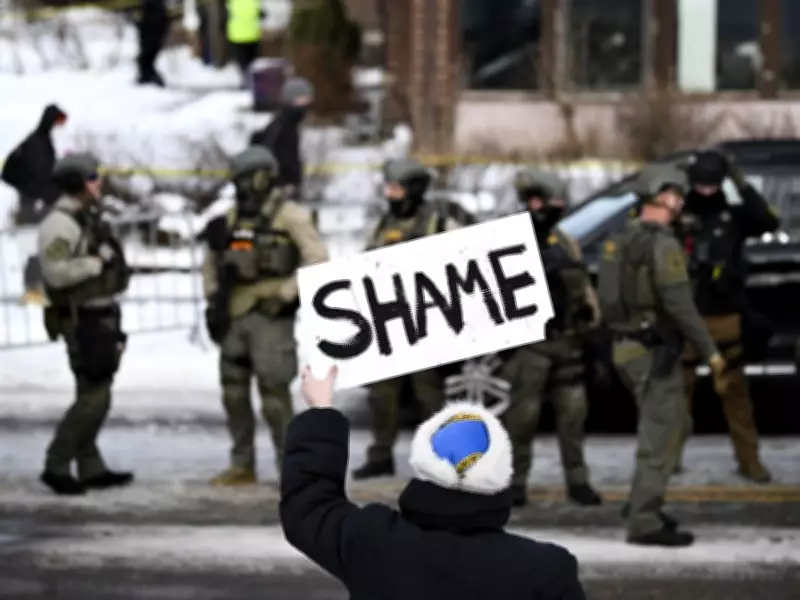
The crisis manifests in multiple alarming dimensions. Domestically, Wesoky points to a landscape marred by corruption, from crypto scams and ballroom bribes to a White House he views as fundamentally compromised. He raises questions about heavily redacted documents and highlights the gutting of healthcare funding. Most disturbingly, he details a paramilitary occupation by masked Immigration and Customs Enforcement (ICE) agents, who he alleges are kidnapping individuals, detaining children, and killing American citizens engaged in peaceful protest, followed by administration efforts to defame the victims.
The damage, he argues, extends globally. Trump's tariffs jeopardize economic stability, his fixation on Greenland risks fracturing NATO, and his declaration that Canada is "no longer a friend" severs a historic partnership. This external aggression compounds the internal decay, painting a picture of a nation in profound distress.
From Observation to Action: Prescriptions for Canada and Expats
While the situation may induce panic, Wesoky insists that the question is no longer how America arrived at this juncture, but how to move forward. He contends that feeling powerless is not an option, even from across the border. He proposes several concrete actions that Canadians and American expatriates can take to fight the chaos and alleviate suffering.
First, he calls on Canada to terminate the Safe Third Country Agreement. This policy, which turns back asylum seekers at the U.S. border, is predicated on both nations being "safe" for refugees—a premise Wesoky argues is now demonstrably false. Ending the agreement would fulfill Canada's international legal obligations, reduce human suffering, and reinforce the country's role as a beacon of hope. The policy could be reinstated when stability returns to the United States.
Second, Wesoky urges scrutiny of Canadian corporate and institutional complicity. He reveals that his own university, McGill, holds over $2.2 million in investments in Palantir, an AI surveillance firm that provides data for ICE operations. Other examples include Ontario-based Roshel supplying armoured vehicles to ICE, a U.S. subsidiary of Montreal's GardaWorld staffing a controversial detention center, and Vancouver's Hootsuite providing social media services to the Department of Homeland Security. Through public pressure, mobilization, or government action, Canada must ensure it is not bankrolling democratic erosion that ultimately threatens its own sovereignty.

Finally, he emphasizes the political power of the American diaspora in Canada. With over 600,000 U.S. citizens eligible to vote, the upcoming midterm elections in November present a critical opportunity to slow the current administration's agenda. He directs expatriates and dual citizens to resources like votefromabroad.org to register and participate.
Jacob Wesoky's testimony is not merely one of despair but a call to concerted action. "I may be watching from my neighbour’s lawn," he concludes, "but I am not powerless, and neither are you. Let’s work together to put out the fire before it consumes us all." As the president of Democrats at McGill, the largest College Democrats group outside the United States, his perspective bridges the personal anguish of an exile with the strategic resolve of an activist, offering a unique lens on a crisis unfolding just south of the border.