How Sports Heal, Unite and Inspire: A Leader's Journey from Residential Schools to Olympic Torch
Dr. Wilton Littlechild, a prominent Indigenous leader and former commissioner of the Truth and Reconciliation Commission of Canada, reflects on a profound truth: sports saved his life. This powerful statement emerges from deep personal reflection on a journey that began on an Indian reserve, included forced attendance at three residential schools, and culminated in carrying the Olympic torch in 2010.
Surviving Residential Schools Through Sports
For six-and-a-half years serving on the Truth and Reconciliation Commission, Dr. Littlechild witnessed firsthand the devastating impacts of Canada's residential school system. The commission was court-ordered to examine what happens when children are legally separated from their parents and placed in institutions. For Dr. Littlechild, this meant fourteen years intended "to be Christianized and civilized" with the explicit purpose of "killing the Indian in the child."
Despite these horrific conditions, hockey became his salvation. "Because of hockey, they did not kill my spirit," he states emphatically. The commission heard thousands of testimonies about abuse and inter-generational trauma, revealing how children weren't expected to succeed. Yet for many, sports provided:

- Structure and purpose in chaotic environments
- An option to choose life over despair
- A crucial escape from daily hardships
- A reason to keep getting up each day
The Transformative Power of Physical Activity
Dr. Littlechild discovered hockey at age fourteen, describing it as "a lifetime blessing." Before being called inside each evening, he would run approximately five miles on gravel roads, initially tempted to run away but eventually finding the activity therapeutic. "I did not just run to run away from my childhood abuse, to cry, to pray," he explains. "It became a run toward sport."
This physical activity evolved into more than exercise—it became training for life. Sports taught him discipline, one of the sacred grandfather teachings fundamental to Indigenous culture. Through hard work in athletics, he began to recognize his own potential, fostering hope for a future that seemed impossible within the residential school system.
Sports as Cultural Preservation and Healing
During playtime, residential school children experienced moments of normalcy: fun, language, laughter, and friendly competition. These brief respites from regimented school schedules represented bright lights in what Dr. Littlechild describes as "the saddest, darkest, and most unknown chapter of Canadian history."
Sports as survival carries essential lessons and teachings that align with Indigenous values. The joy of effort in sport and traditional games embodies sacred teachings including:
- Respect for oneself and others
- Honesty in competition and self-assessment
- Courage to face challenges
- Strength to persevere through adversity
From Residential Schools to Olympic Glory
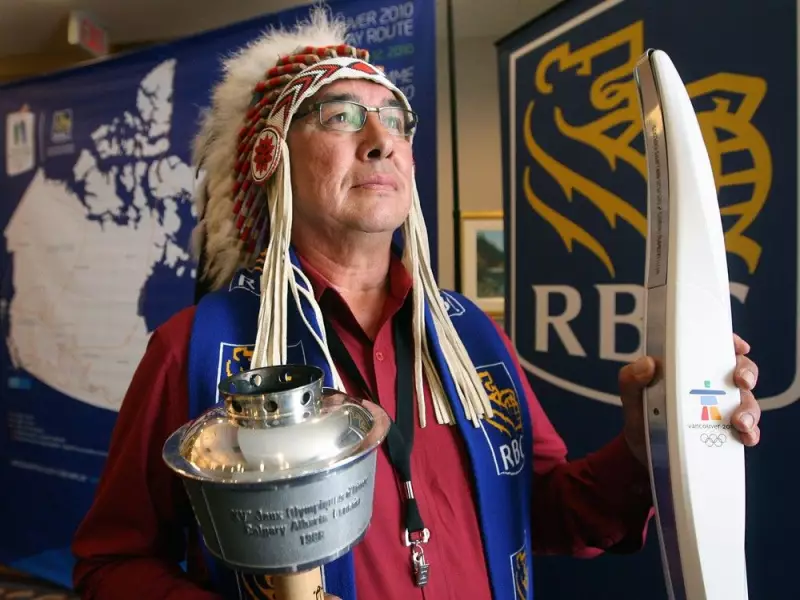
Dr. Littlechild's athletic journey culminated in his selection by RBC as a 2010 Olympic Torchbearer, announced at the Hyatt Regency in Calgary on July 22, 2009. This honor symbolizes how far sports carried him from those difficult beginnings. The lessons learned through athletics—positive thinking, a winning spirit, and the connection between effort and results—naturally translated to educational success.
As he reflects on his schoolmates who survived through quiet prayer, courage, and mutual support, Dr. Littlechild emphasizes that sports provided more than physical activity. They offered resilience, purpose, and proof that Indigenous youth could succeed despite systematic attempts to suppress their culture and spirit.
Today, his message carries particular relevance for Canadian youth facing challenges. The discipline of sports—"practice hard, play hard, study hard"—creates a foundation for achievement in all areas of life. As one coach taught him: "Look good, feel good, play good." This philosophy extends beyond the playing field to become a blueprint for personal growth and community healing.