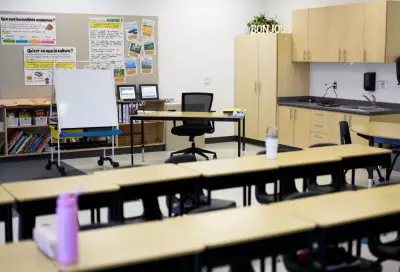
Parents in Ottawa are expressing deep concern and seeking clear explanations from the Ottawa-Carleton District School Board (OCDSB) as it moves forward with plans to phase out alternative schools and eliminate the option for middle French immersion. The decision, which has sparked significant community reaction, was a focal point of discussion on January 14, 2026.
Community Reaction and Parental Concerns
The phase-out has left many families feeling uncertain about their children's educational future. Parents argue that these specialized programs offer crucial choices that cater to diverse learning needs and language acquisition goals. The removal of these options, they say, limits educational diversity within the public system and disrupts long-term plans families have made for their children's schooling.
One such parent is Bob Gordon, who was photographed outside his daughters' school on the day the news was reported. His stance reflects a broader sentiment among affected families who feel the board's communication has been lacking. They are demanding detailed answers regarding the rationale behind the cuts, the timeline for implementation, and what alternative supports or programs will be provided for students currently enrolled or planning to enroll in these streams.

The Board's Decision and Its Implications
While the original report did not specify the OCDSB's stated reasons for the phase-out, such decisions are often driven by factors like budget constraints, declining enrolment in specific programs, or a strategic reallocation of resources. The elimination of the middle French immersion entry point, in particular, represents a significant shift in second-language education policy within the district. It centralizes entry into French immersion at earlier grades, potentially creating barriers for students who develop an interest in bilingualism later in their academic journey.
Similarly, alternative schools often provide pedagogical approaches—such as Montessori, Waldorf, or community-focused models—that differ from mainstream classrooms. Their phase-out consolidates educational offerings under a more standardized model, which critics argue reduces parental choice and the district's ability to serve varied learning styles.
Looking Ahead: Uncertainty and Advocacy
The situation leaves a cloud of uncertainty over dozens of Ottawa families. Key questions remain unanswered: What will happen to the staff dedicated to these programs? How will students in alternative schools be integrated into mainstream settings? What data supported the conclusion that these programs were no longer viable?
Parental advocacy groups are expected to mobilize, seeking meetings with trustees and board officials to challenge the decision or seek compromises. The outcome of this dispute will likely influence the OCDSB's relationship with the community and set a precedent for how it handles program changes in the future. For now, parents like Bob Gordon are left waiting for the transparency and detailed planning they believe the situation demands.