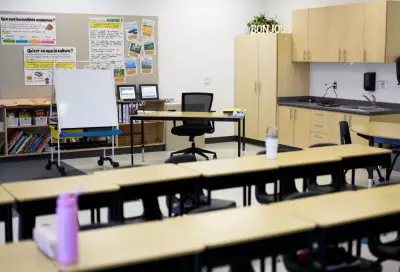
In the wake of the Alberta Teachers’ Association (ATA) strike in October, a contentious debate has emerged, placing independent schools squarely in the crosshairs. Critics suggest this focus may be a diversion from systemic issues within the public education system itself. To navigate this complex issue, a clear examination of the facts is essential.
The Fiscal Reality: Independent Schools Save Public Money
Children attending independent schools in Alberta are full residents of the province. Their families contribute to public education through provincial taxes, while also paying tuition for their chosen school. Despite this dual contribution, these students are funded at only 70% of the rate allocated to students in the public system.
The significant financial gap is bridged by tuition payments and relentless school fundraising efforts. Furthermore, the government does not provide independent schools with buildings or land, adding substantial capital costs that these institutions must cover independently. Forcing thousands of students from independent schools into the public system would carry a price tag in the hundreds of millions of dollars, exacerbating the strain on already-overcrowded classrooms across Alberta.

Beyond Elitism: The Diverse Landscape of Independent Education
The narrative that independent schools cater primarily to an elite class is a profound misconception. Families choose these institutions for a wide array of reasons that reflect Alberta's diversity.
Just over half of Alberta's independent schools are faith-based, seeking to extend religious teachings from the home into the educational environment. The second-largest category consists of special emphasis schools, which serve specific community needs. Examples include Calgary’s Connect Society for children with hearing loss and Janus Academy, which supports students with autism. Many independent schools also operate as partnerships for home-schooling families.
The vast majority of families who opt for independent education are at or below the provincial average income level. They make considerable sacrifices and seek community support because finding the right educational fit for their child is a paramount family priority. Painting all independent schools with a broad brush of elitism is not only inaccurate but threatens a vital component of Alberta's educational ecosystem.
The Broader Impact and Conclusion
The campaign to redirect funding away from independent schools overlooks their role as a pressure valve for the public system and their service to niche, often vulnerable, student populations. The October 2024 strike by the Alberta Teachers’ Association highlighted deep-seated challenges in public education, but framing independent schools as part of the problem is a misleading and potentially damaging approach.
Ultimately, these schools represent a choice for Alberta families and a net benefit to the province's educational funding. Eliminating or severely curtailing their support would not solve the public system's issues; it would instead create new financial burdens and limit educational diversity, harming the very families the system aims to serve.