In a heartfelt essay from 2012, later republished, author Brian Doyle reflects on a pivotal moment in his education as a young teen in Ottawa. He credits a teacher's frank revelation—that the historic Spice Trade was fundamentally driven by desires for sex and luxury—for finally making learning resonate with him as a 14-year-old boy struggling in school.
The Rigid Educational World of a Depression Baby
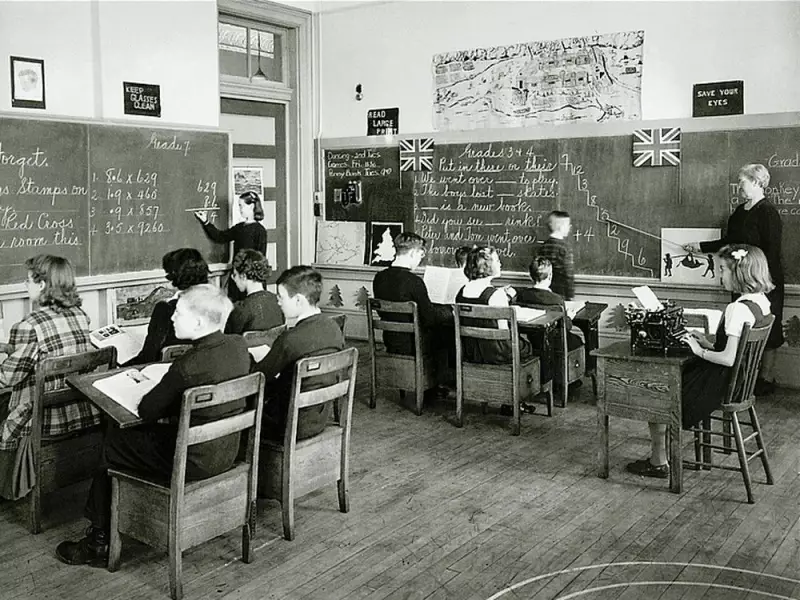
Doyle, describing himself and his peers as "Depression Babies," paints a stark picture of the Canadian school system in the mid-20th century. He contrasts it sharply with modern institutions. Schools of his era acted as rigid separators, much like the cream separator he operated on his Aunt Minnie's farm in the Gatineau Hills.
He provides a telling statistic: of 100 Ontario children who started kindergarten in 1935, only 10 remained by the post-secondary level, with a mere five passing high school. The vast majority, the "skim milk," poured out into the workforce after Grade 8 or 10. Doyle, from a working-class family with little educational history, was firmly on track to join them.

A Descent Towards Failure and a Lifeline
Despite quiet encouragement from his mother and sister to read at home, Doyle was failing miserably academically as he approached the critical Grade 8 cutoff. He writes that he likely passed into Grade 9 "on condition" due to being a reader, with the threat of termination hanging over him if he didn't improve.
The turning point came from a teacher who quietly shared a secret that cut through the abstraction of history. Framing the Spice Trade not just as an economic endeavor but as a human pursuit for aphrodisiacs and status made the subject suddenly comprehensible and intriguing to a teenage mind. This moment of connection offered a "why" that textbooks had missed.
The Lasting Impact of Relatable Teaching
This anecdote serves as a powerful testament to the impact of innovative and relatable teaching. For Doyle, it was the key that unlocked understanding and engagement, potentially steering him away from the "skim milk" spout of his era's educational separator. He contrasts his experience with today's system, where he notes 80 out of 100 students now pass high school, pondering whether the end of such stark separation is good or bad.
The essay, originally part of a series of 24 for the Ottawa Citizen in 2012 and featured again in 2024, is more than a personal memory. It is a reflection on educational philosophy, class, and the timeless need for teachers to find ways to make knowledge matter to their students. Doyle's story underscores that sometimes, the path to academic success isn't found in dry facts, but in understanding the compelling, often human, motivations behind them.