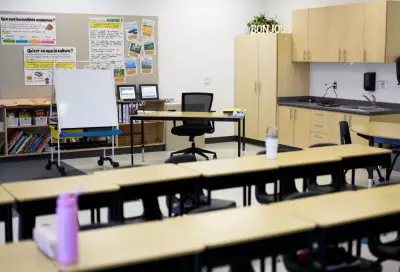
The Quebec government's recent move to reintroduce formal politeness and civility rules in provincial schools is facing significant pushback from educators. Teachers across the province argue the new policy, announced in early January 2026, is a superficial solution that fails to address the underlying causes of challenging student behaviour.
Policy Details and Educator Concerns
The policy, framed by the government as a return to traditional courtesy, mandates specific formal language and behaviours for students within the school environment. The initiative was officially reintroduced on January 06, 2026. However, frontline educators contend that the top-down approach is misguided.
Teachers' unions and individual instructors report that the policy lacks the necessary support structures and resources to be effective. They emphasize that complex issues affecting student conduct, such as mental health challenges, social pressures, and classroom resource shortages, are not solved by enforcing polite phrases. Many feel the government has missed a crucial opportunity to collaborate with educational professionals on a more holistic strategy.

A Clash Between Tradition and Modern Pedagogy
The debate highlights a growing tension between traditional disciplinary models and contemporary, evidence-based approaches to student development. Proponents of the policy see it as reinforcing valuable social norms. Critics, however, view it as an outdated measure that does not align with modern understandings of child psychology and positive behavioural support.
Educators stress that respect and civility are best cultivated through relationship-building, inclusive school cultures, and addressing students' emotional and academic needs, rather than through compulsory formalities. They warn that without addressing these root causes, the policy risks being merely performative.
Looking Forward: Calls for a Revised Approach
The strong reaction from Quebec's teaching community suggests the policy may face implementation challenges. The central criticism remains that the government's directive is a one-size-fits-all solution to a multifaceted problem. Teachers are calling for a seat at the table to help design supportive frameworks that genuinely improve school climate and student well-being.
As the 2026 school year progresses, the effectiveness of the civility rules will be closely watched. The outcome of this policy clash could influence future education policy in Quebec and potentially other regions considering similar measures. The key question remains whether enforcing formal politeness can succeed where deeper systemic support is lacking.