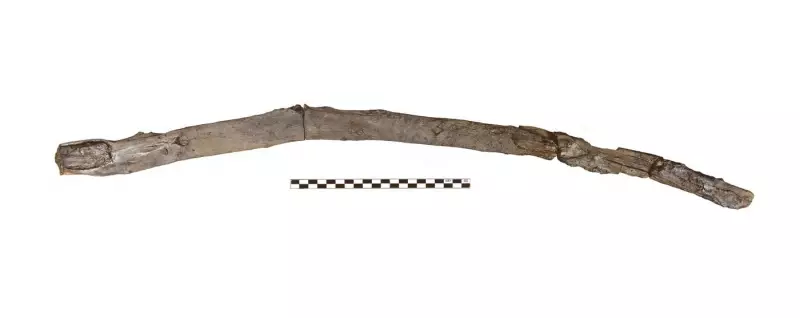
Groundbreaking Discovery: 430,000-Year-Old Wooden Tools Unearthed in Greece
In a landmark archaeological find, researchers have recovered the oldest known wooden tools ever discovered at a site in Greece. These artifacts, dating back an astonishing 430,000 years, provide a rare and invaluable window into the technological capabilities and daily lives of early human ancestors during the Middle Pleistocene epoch.
A Glimpse into Prehistoric Innovation
The tools, which include a pointed implement possibly used for digging, were preserved under exceptional conditions that allowed the wood to survive for hundreds of millennia. This discovery challenges previous assumptions about the preservation of organic materials from such ancient periods and significantly expands our understanding of early human material culture beyond stone tools.
Dr. Katerina Harvati, a leading paleoanthropologist involved with the research, emphasized the significance of the find. "Wooden artifacts from this time period are extraordinarily rare due to natural decomposition processes. Their survival offers direct evidence of the sophistication and adaptability of early hominins," she stated.

Technological Implications and Analysis
The tools demonstrate deliberate shaping and wear patterns consistent with use. Analysis suggests they may have served multiple purposes, including:
- Digging for roots or tubers
- Processing plant materials
- Potential hunting or defensive applications
- Woodworking or construction activities
This discovery pushes back the timeline for complex wooden tool use by early humans in Europe and provides crucial evidence about their cognitive abilities and environmental interactions. The artifacts were found in sediment layers that have preserved other organic remains, creating a more complete picture of the paleoenvironment.
Broader Archaeological Significance
The Greek site joins a very select group of locations worldwide where such ancient wooden artifacts have been preserved. These tools complement existing stone tool assemblages and offer researchers new avenues for understanding:
- Technological evolution during the Lower Paleolithic
- Resource utilization and adaptation strategies
- Social organization and knowledge transmission
- Environmental interactions and survival techniques
As analysis continues, scientists hope to determine the wood species used, which would provide additional information about resource selection and availability. The discovery underscores the importance of continued archaeological exploration in regions with favorable preservation conditions.
This remarkable find not only rewrites aspects of human technological history but also demonstrates how much remains to be discovered about our ancient ancestors' capabilities and innovations.