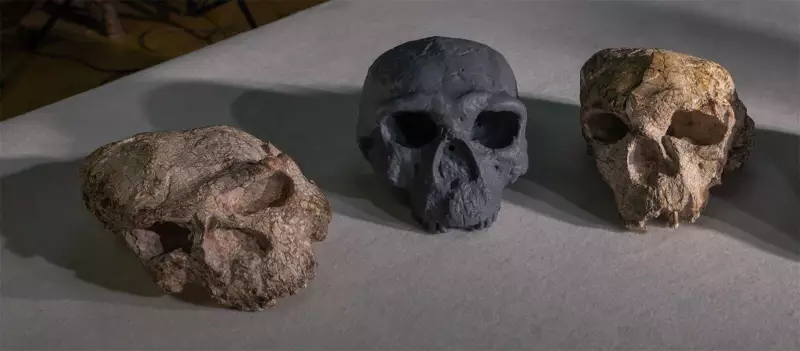
A groundbreaking scientific discovery in 2025 has provided a crucial face to one of human evolution's greatest mysteries. Molecular evidence has now definitively linked the famous Dragon Man skull to the enigmatic Denisovans, a sister group to Neanderthals.
The Key Connection: From Mystery to Identification
This pivotal link, established through advanced molecular analysis, represents a watershed moment for paleoanthropologists. For years, the Denisovans were known primarily from fragmentary genetic traces and a few bone fragments, like those from Siberia's Denisova Cave. The Dragon Man skull, with its distinctive features including a large cranial capacity and prominent brow ridge, was a stunning but isolated find. The new evidence confirming it as Denisovan provides a tangible, physical reference point for this elusive human lineage.
This connection dramatically changes the game. Researchers now have a robust anatomical template. "It's like finally having a complete picture for a face you've only seen in puzzle pieces," one expert analogized. This template makes it significantly easier to identify other potential Denisovan remains that have been unearthed but remained difficult to classify.

Implications for Fossil Discoveries in China
The impact is particularly profound for archaeological sites across China, where several significant skulls and fossils have been discovered. With the Dragon Man as a confirmed benchmark, scientists can re-examine these other specimens with fresh eyes and more precise comparative criteria. This could lead to a rapid expansion of the known Denisovan fossil record, moving it beyond tiny fragments to a more complete understanding of their physical diversity, geographic range, and timeline.
The discovery was formally highlighted in a report published on December 26, 2025. The research involved an international collaboration, with contributions that included imagery analysis from sources like Guanghui Zhao, as shared via CNN Newsource. This work underscores how interdisciplinary efforts—combining traditional archaeology with cutting-edge genetic and molecular science—are solving long-standing puzzles of our deep past.
Reshaping the Human Family Tree
The ramifications extend far beyond a single skull. Placing the Dragon Man firmly within the Denisovan branch helps clarify the complex web of relationships between modern humans (Homo sapiens), Neanderthals, and Denisovans. It provides concrete evidence of the morphological variation within the Denisovan population and offers clues about their adaptations and capabilities.
This breakthrough is expected to accelerate research for years to come. As more fossils are confidently attributed to the Denisovans, scientists will gain unprecedented insights into how this group lived, interacted with other hominins, and ultimately, why they disappeared. The year 2025 will be remembered as the time when a mysterious branch of the human family tree finally gained a recognizable face, forever altering the narrative of our shared evolution.