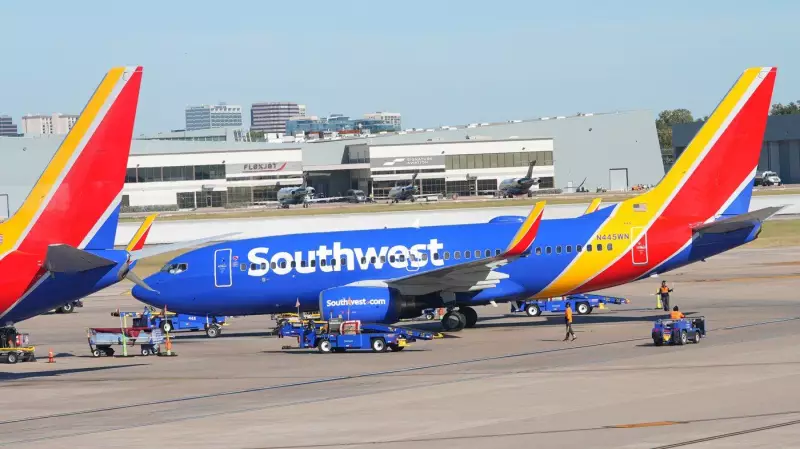
The U.S. government has significantly reduced a major financial penalty initially levied against Southwest Airlines for its operational collapse during the 2022 holiday travel season. The Department of Transportation announced it has waived a substantial portion of the original fine.
A Reduced Penalty for Holiday Travel Chaos
Originally, Southwest Airlines faced a $140 million civil penalty from the U.S. Department of Transportation. This penalty was a consequence of the carrier's systemic failure in December 2022, which led to the cancellation of nearly 17,000 flights, stranding millions of passengers during the critical Christmas and New Year's period.
However, in a recent decision, the department has waived $33 million of that fine. The remaining $107 million is not a direct cash payment to the government. Instead, it will be allocated as credits for future compensation owed to Southwest passengers affected by significant delays or cancellations over the next several years.

Details of the Settlement and Consumer Protections
The settlement, finalized on December 7, 2025, mandates that Southwest establish a $90 million compensation fund. This fund will be used to provide prompt payments of $75 or more to travelers who experience controllable delays of three hours or more when arriving at their destination.
Furthermore, Southwest is required to provide $10 vouchers to passengers significantly impacted by future widespread disruptions. An additional $7 million will be paid directly to the U.S. Treasury. The airline has also committed to enhancing its customer service plans and ensuring better communication with passengers during irregular operations.
Broader Implications for Airline Accountability
This case represents one of the largest penalties ever pursued by the U.S. Department of Transportation for consumer protection violations. The decision to convert a large portion of the fine into a passenger compensation fund signals a shift towards more direct consumer restitution.
The 2022 meltdown was attributed to Southwest's outdated scheduling software and operational processes, which failed under winter storm pressure. The subsequent federal investigation highlighted systemic issues in the airline's contingency planning. This settlement aims to directly address those shortcomings by tying future financial obligations directly to passenger welfare, setting a potential precedent for how regulators handle major airline failures.
For Canadian travelers and industry observers, this action underscores the increasing regulatory focus on airline accountability and passenger rights, a trend also seen in ongoing discussions within Canada's own transportation sector.