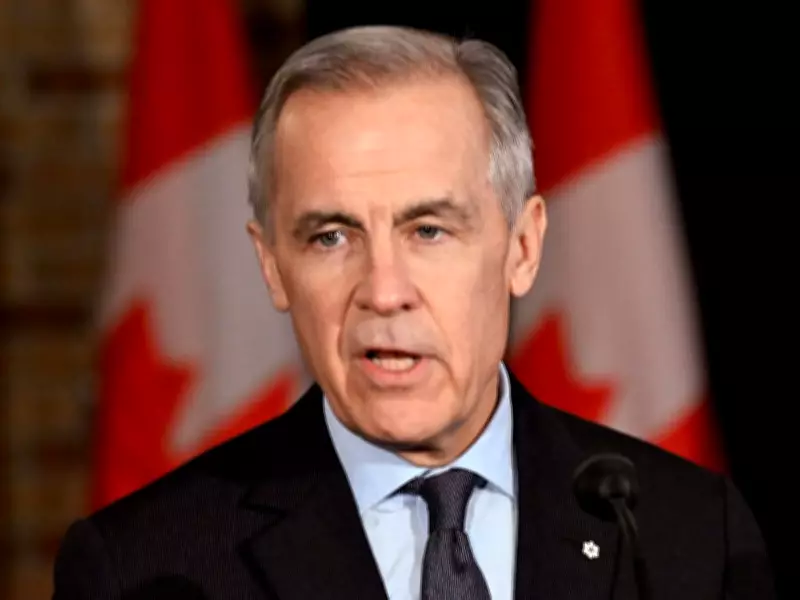
Carney Unveils Revised Electric Vehicle Strategy with Incentives and Infrastructure Funding
Prime Minister Mark Carney has announced a significant shift in Canada's electric vehicle policy framework, delaying the previously established mandate while reintroducing consumer incentives and committing substantial funding to charging infrastructure. The announcement, made at an auto parts plant in Vaughn, Ontario, represents a recalibration of the government's approach to automotive electrification.
Mandate Delay and Revised Targets
The federal government has cancelled the policy commonly referred to as the EV mandate, which would have required automakers to exclusively produce and sell electric vehicles by 2035. Instead, new regulations will be drafted by year-end that establish a more gradual transition pathway.
The revised targets aim for 75 percent EV adoption by 2035 and 90 percent by 2040, focusing on overall greenhouse gas emission reductions rather than complete electrification. This approach allows automakers to continue producing internal combustion engine vehicles provided their overall emissions decrease substantially.

Industry Minister Mélanie Joly emphasized that Canada's automotive sector faces a pivotal moment, contending with United States tariffs while navigating the challenging transition to electric vehicles. "How do we protect what we built while positioning ourselves to lead in what comes next?" she questioned during a press conference. "The answer is simple: We are an auto nation."
Financial Incentives and Infrastructure Commitments
The government has allocated $2.3 billion to revive consumer incentives for electric vehicle purchases, with additional funding directed toward charging infrastructure and industry support. Beginning February 16, the federal government will reintroduce a $5,000 cash incentive for EV purchases and a $2,500 incentive for plug-in hybrid vehicles.
Eligibility for these rebates requires that vehicles be manufactured in countries with free trade agreements with Canada, explicitly excluding China. The vehicles must also cost less than $50,000, though this limit is waived for EVs and plug-in hybrids manufactured in Canada, including models like the Dodge Charger and Pacifica minivan.
These rebates will gradually decrease to $2,000 per EV and $1,000 per plug-in hybrid by 2030, with the government aiming to encourage the purchase of approximately 840,000 vehicles over a five-year period.
Infrastructure and Industry Support
Complementing the consumer incentives, the Canada Infrastructure Bank will dedicate an additional $1 billion to developing charging infrastructure across the country. This investment addresses one of the key barriers to widespread EV adoption—the availability of convenient charging options.
The government has also committed $3 billion in tax credits and other incentives for the automotive industry, alongside a pledge to revise the framework that rewards automakers manufacturing in Canada. These measures aim to strengthen domestic production capabilities while supporting the transition to electric vehicle manufacturing.
Industry Response and Market Context
The rollback of the strict EV mandate has been welcomed by the automotive sector, which had long criticized the original policy as overly rigid and financially burdensome. The previous mandate required at least 20 percent of new vehicles sold in Canada to be zero-emission by 2026, increasing to 60 percent by 2030 and 100 percent by 2035.
Current market data reveals that battery-electric and plug-in hybrid vehicles account for approximately 10 percent of new vehicle sales—only half of the 20 percent threshold originally set for 2026. Under the previous regulations, automakers failing to meet these targets would have needed to purchase credits from EV manufacturers like Tesla Inc. to avoid significant penalties.
Prime Minister Carney emphasized the strategic nature of these policy adjustments, stating, "We are making strategic decisions and generational investments to build a strong Canadian auto sector, where Canadian workers build the cars of the future."

The revised approach balances environmental objectives with economic realities, recognizing the challenges of transitioning an entire industry while maintaining Canada's competitive position in the global automotive market.