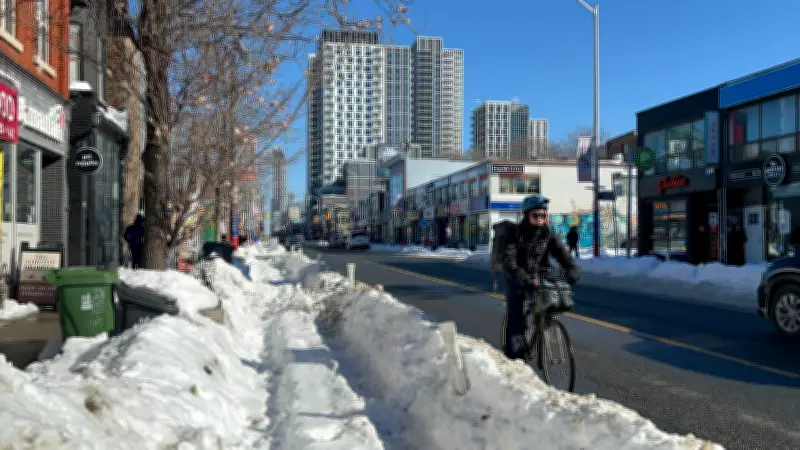
Snow-Covered Bike Lanes Remain a Persistent Issue in Toronto Following Major Winter Storm
Weeks after a historic snowstorm blanketed Toronto, many of the city's dedicated bike lanes remain obstructed by accumulated snow and ice, creating significant challenges for cyclists and raising questions about winter maintenance priorities. The situation highlights ongoing tensions between promoting active transportation and managing winter infrastructure in Canada's largest city.
Bloor Street Bike Lanes Still Blocked
Photographic evidence from early February 2026 shows bike lanes along Bloor Street, one of Toronto's major east-west corridors, still partially blocked by snow piles more than a week after the city received what meteorologists described as a historic dump of snow. This persistent obstruction forces cyclists to either navigate treacherous conditions or merge with vehicle traffic, creating safety concerns for all road users.
The continued presence of snow in these designated cycling corridors weeks after the storm has frustrated many Toronto residents who rely on bicycles for transportation throughout the year. While main roadways have been largely cleared for vehicular traffic, the slower progress on bike lane clearance suggests these active transportation routes may be receiving lower priority in the city's winter maintenance hierarchy.

Winter Cycling Infrastructure Challenges
Toronto's experience with persistent snow-covered bike lanes following major winter events raises important questions about how Canadian cities can better support year-round cycling. Several factors contribute to this ongoing challenge:
- Equipment limitations: Standard snowplows designed for roadways may not effectively clear narrower bike lanes
- Storage space: Limited areas to place snow removed from bike lanes in dense urban environments
- Resource allocation: Competing demands for snow removal equipment and personnel during major winter events
- Design considerations: Whether current bike lane designs adequately account for winter maintenance needs
These infrastructure challenges come at a time when many Canadian cities, including Toronto, have made significant investments in expanding their cycling networks to promote sustainable transportation alternatives and reduce traffic congestion.
Broader Implications for Active Transportation
The visibility of snow-covered bike lanes weeks after a major storm has sparked broader conversations about municipal commitments to active transportation infrastructure. Advocates argue that consistent winter maintenance of bike lanes is essential for encouraging year-round cycling and meeting climate action goals. When bike lanes become impassable for extended periods, it undermines investments in cycling infrastructure and discourages potential cyclists from adopting this sustainable transportation mode.
Other Canadian cities with significant winter cycling populations, such as Montreal and Edmonton, have developed specialized equipment and protocols for clearing bike lanes during winter months. Toronto's experience suggests there may be room for improvement in how the city approaches winter maintenance of its growing cycling network.
As climate patterns continue to evolve, with potentially more extreme winter weather events in some regions, the challenge of maintaining accessible active transportation infrastructure throughout the winter months may become increasingly important for urban planners and municipal governments across Canada.