Spanish Authorities Investigate Cracked Track in Fatal High-Speed Train Collision
Spanish investigators examining the catastrophic high-speed train collision that occurred near Adamuz, Spain, on January 19, 2026, have identified a potentially critical factor in their preliminary findings. According to sources familiar with the ongoing probe, evidence suggests that a cracked section of railway track may have played a significant role in causing the devastating accident.
Details Emerging from the Crash Site Investigation
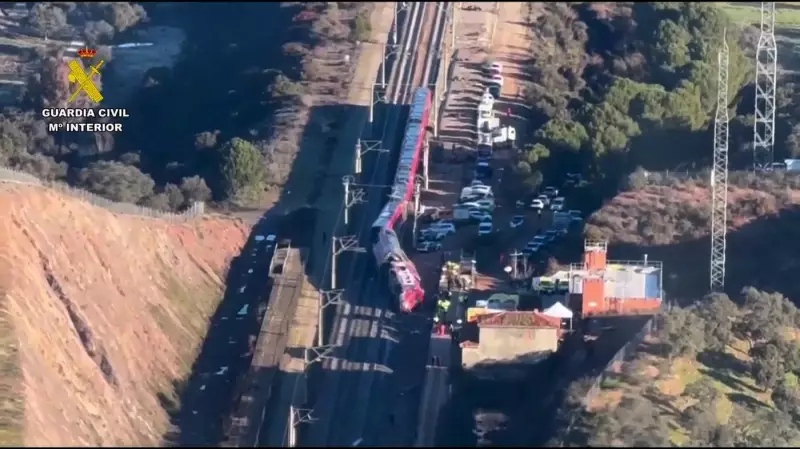
The collision involved an Iryo high-speed train and resulted in a substantial emergency response operation. Rescue workers were photographed at the scene in aerial views provided by Spain's Guardia Civil, showing the extensive damage to the train and the challenging conditions faced by first responders. The incident has raised serious questions about railway infrastructure maintenance and safety protocols for high-speed rail networks in Spain and across Europe.
While the investigation remains ongoing, the focus on track integrity represents a crucial development in understanding what led to this transportation disaster. Railway experts note that even minor defects in tracks can have catastrophic consequences when trains are traveling at high velocities, as the forces involved multiply dramatically with increased speed.

Broader Implications for Rail Safety Standards
This incident comes at a time when many countries are expanding their high-speed rail networks as part of climate-friendly transportation initiatives. The Spanish probe's findings about potential track failure could influence safety inspections and maintenance procedures internationally. Transportation authorities worldwide typically conduct regular track inspections using specialized equipment designed to detect cracks, wear, and other defects before they become hazardous.
The Spanish railway system has generally maintained a strong safety record, particularly for its high-speed services that connect major cities across the country. This accident represents one of the more serious incidents in recent years and has prompted calls for enhanced safety measures and more frequent infrastructure assessments.
Ongoing Recovery and Investigation Efforts
Emergency services worked extensively at the crash site following the collision, with multiple agencies coordinating their response. The investigation is expected to continue for some time as officials examine all possible factors, including train equipment, signaling systems, human factors, and environmental conditions in addition to the track infrastructure.
As the probe advances, Spanish transportation authorities will likely face pressure to implement any recommended safety improvements swiftly. The findings could also influence regulatory discussions at the European Union level regarding harmonized safety standards for high-speed rail networks across member states.