Asian Markets Stage Rebound Amid War Optimism, But Gains Remain Limited
Asian shares experienced a notable recovery on Tuesday, bouncing back from the steep declines witnessed just a day earlier. This rebound was largely driven by global investors betting that the ongoing war with Iran may not extend for an extended period. Despite this positive shift, the gains achieved fell significantly short of offsetting the substantial losses incurred on Monday, when oil prices had surged close to $120 per barrel before retreating to approximately $90. In early trading, U.S. futures indicated a slight decline of about 0.2%, reflecting lingering uncertainties in the market.
Trump's Comments Ease Investor Fears, Yet Threats Loom
Helping to alleviate investor anxieties, U.S. President Donald Trump provided remarks to CBS News, stating he believes "the war is very complete, pretty much." This comment suggested a potential de-escalation, contributing to the market's upward momentum. However, Trump also issued warnings, indicating that intensified action against Iran could be forthcoming if the nation attempts to disrupt the global oil supply. These mixed signals have kept traders on edge, balancing optimism with caution.
Japan's Economic Data Boosts Tokyo's Nikkei 225
In Tokyo, the benchmark Nikkei 225 index climbed 2.9% to close at 54,248.39. This surge was supported by revised economic data released by the Japanese government, which revealed that the economy grew at a faster pace than initially estimated in the final quarter of the previous year. The growth was primarily fueled by robust business investments, with the economy expanding at an annual rate of 1.3%, a significant improvement from the earlier estimate of a mere 0.2%.

Neil Newman, a managing director and head of strategy at Astris Advisory Japan, commented on the situation, saying, "Today is the rebound, obviously positive comments from President Trump overnight, we're starting to see the light at the end of the tunnel for the war." He added, "So volatility is going to remain with us but things are certainly looking a lot brighter today."
Regional Markets Show Mixed Gains
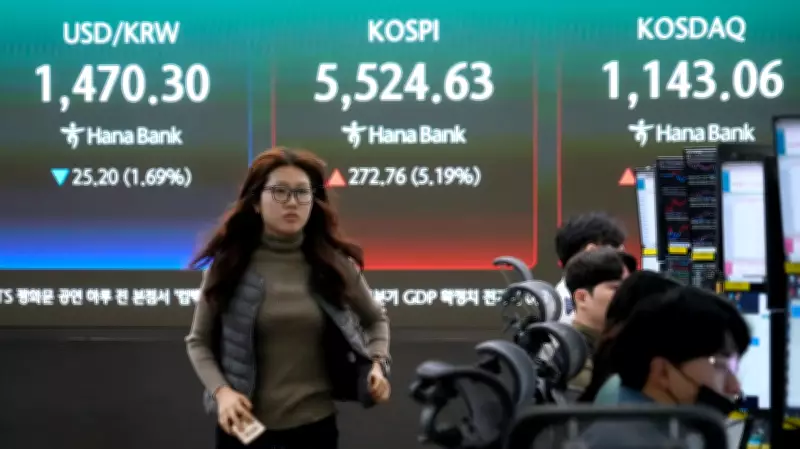
Across the Asia-Pacific region, other major indices also posted gains, though the extent varied. Australia's S&P/ASX 200 rose by 1.1% to 8,692.60, while South Korea's Kospi jumped an impressive 5.4% to 5,532.59. In Hong Kong, the Hang Seng added 2.1% to reach 25,937.59, and the Shanghai Composite index in China increased by 0.6% to 4,120.45. These movements highlight how share prices have been closely tracking the fluctuations in oil prices, which have been highly volatile as the conflict intensifies.
Oil Prices and Economic Concerns Persist
In energy trading on Tuesday, benchmark U.S. crude oil fell by $5.78 to settle at $88.99 per barrel, and Brent crude, the international standard, dipped by $5.79 to $93.17 per barrel. This decline followed a tumultuous session on Monday, where stock prices in the U.S. had swung from a steep early loss to a moderate gain. The S&P 500, for instance, dropped as much as 1.5% before flipping to a gain of 0.8%, closing at 6,795.99. Similarly, the Dow Jones Industrial Average recovered from a plunge of nearly 900 points to rise by 239 points, or 0.5%, ending at 47,740.80, and the Nasdaq composite climbed 1.4% to 22,695.95.
The uncertainty surrounding oil prices remains a critical factor, with investors worried about how high they might climb and how long they could stay elevated due to disruptions in Middle East energy facilities. If oil prices remain at very high levels for an extended period, it could strain household budgets already burdened by high inflation and increase costs for companies, potentially leading to a worst-case scenario of "stagflation"—where economic growth stagnates while inflation stays high.

Focus on the Strait of Hormuz and Global Implications
Particular concerns have centered on the Strait of Hormuz, a narrow waterway off Iran's coast through which approximately one-fifth of the world's oil typically passes daily. Iran has threatened to set fire to ships navigating this strait, raising fears of a significant supply disruption. According to oil and gas strategists at Macquarie Research, if the strait were to be closed for just a few weeks, oil prices could soar to $150 per barrel or higher. Trump further complicated matters by mentioning to CBS that he is "thinking about taking it over," adding to the geopolitical tensions.
Bond and Currency Markets Reflect Ongoing Volatility
In the bond market, the yield on the 10-year Treasury note fell to 4.10% from 4.15% late Friday. Worries about high inflation and oil prices had initially pushed yields upward, with the 10-year yield briefly rising above 4.20% early Monday before sliding later in the day as oil prices eased. In currency trading early Tuesday, the U.S. dollar edged up slightly to 157.48 Japanese yen from 157.67 yen, while the euro remained unchanged at $1.1638.
Overall, while Asian markets have shown resilience with a rebound, the gains are tempered by the volatile nature of oil prices and ongoing geopolitical risks. Investors continue to monitor developments closely, balancing optimism from political statements with the harsh realities of economic pressures and potential supply disruptions.