Toronto's Don Summerville Project: A Blueprint for Mixed-Income Urban Living
In a transformative urban renewal initiative, Toronto's Don Summerville complex has emerged as a groundbreaking model for mixed-income housing development. Located just west of Queen Street East and Coxwell Avenue, this ambitious project has replaced two aging social-housing blocks with 770 new residential units, creating a vibrant, integrated community that challenges traditional urban planning paradigms.
A Seamless Blend of Housing Options
Walking through the recently completed Don Summerville complex, visitors find it remarkably difficult to distinguish between affordable housing units and market-rate condominiums. This intentional design choice represents the project's core philosophy: creating neighborhoods where income diversity becomes invisible in daily life. The development features approximately one-third affordable units, with an additional 120 residences reserved for subsidized tenants, while the remaining homes consist of market rentals and condominiums.
The project's innovative approach extends beyond mere housing provision, incorporating 50 units specifically designated for women and families, along with dedicated spaces for artists. This thoughtful allocation ensures the community benefits from diverse perspectives and talents, fostering a richer social fabric.

Strategic Partnerships and Sustainable Economics
The Don Summerville redevelopment represents a collaborative effort between Context Development, RioCan Living, Toronto Community Housing Corporation (TCHC), and the City of Toronto. According to TCHC CEO Sean Baird, the mixed-income model offers both financial and social advantages that make urban development more sustainable in the long term.
"A development that combines affordable, market-rate and ownership housing is simply more sustainable," Baird explains. "It spreads costs across different revenue streams, attracts more favorable financing options, and creates opportunities for ongoing reinvestment in community infrastructure."
Howard Cohen, principal at Context Development, describes the innovative financial structure that made the project possible: "Instead of purchasing the land outright, we constructed the new TCHC building as part of our development agreement. This arrangement allows public land to remain in public ownership while still leveraging its value for community benefit. It's an integrated model that can absolutely be replicated elsewhere, provided municipal governments remain active, engaged partners."
Learning from Toronto's Redevelopment History
The Don Summerville project builds upon lessons learned from earlier Toronto redevelopments like Regent Park and Alexandra Park, where replacing isolated social-housing blocks with mixed-tenure communities dramatically improved resident outcomes across multiple dimensions. Baird notes that these previous initiatives demonstrated significant improvements in health indicators, safety metrics, and employment opportunities for residents.
"The old model of concentrating poverty in isolated housing blocks simply wasn't sustainable," Baird states emphatically. "When households with different income levels live side-by-side, you avoid stacking vulnerabilities in one geographic area. This creates safer, more stable neighborhoods where residents are more likely to participate in local programs, attend community events, and develop meaningful connections with their neighbors."
Community Integration in Practice
Beyond architectural design, the Don Summerville project emphasizes practical community integration through shared amenities and employment opportunities. All residents—regardless of housing type—share access to common spaces including lobbies, fitness facilities, and community rooms. This physical integration fosters natural social connections that might not develop in segregated housing environments.

The development's management teams actively promote collaboration through joint programming initiatives and by encouraging retail tenants to prioritize local hiring. Cohen highlights the significance of this approach: "When a TCHC resident secures employment at the café or grocery store located within our development, that represents genuine, meaningful integration. These connections transform abstract concepts of community into tangible daily experiences."
Remarkably, the project has encountered minimal resistance from market-rate buyers concerned about proximity to affordable housing. Cohen attributes this social acceptance to Toronto's unique civic character: "We've never witnessed significant opposition to people purchasing condominiums adjacent to public housing units. This social acceptance makes our integrated model not just theoretically possible but practically achievable in Toronto's urban landscape."
A Model for Future Urban Development
As Toronto continues grappling with housing affordability challenges, the Don Summerville project offers a compelling template for how cities can incorporate income diversity directly into project design and governance structures. The development demonstrates that mixed-income communities can be both financially viable and socially beneficial, providing residents with improved quality of life while contributing to neighborhood stability.
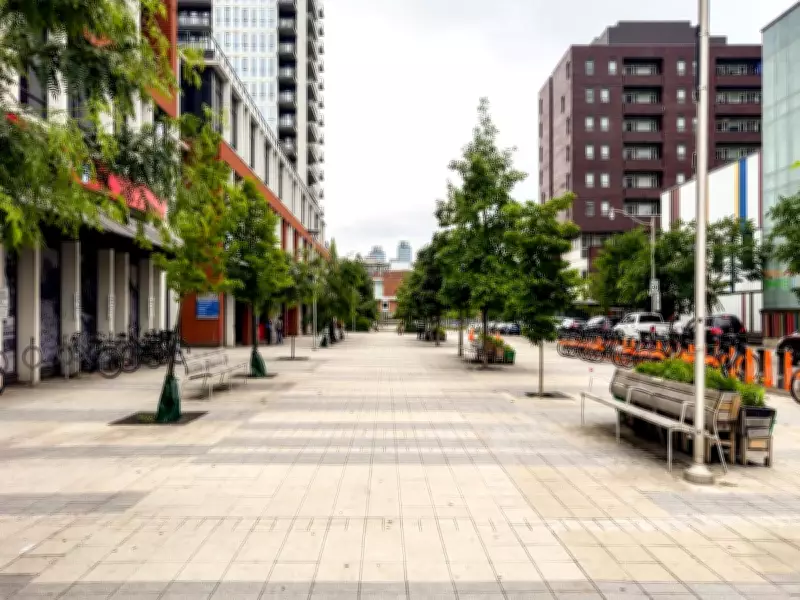
The project's combination of residential units, retail spaces, and public green areas creates a complete neighborhood ecosystem that serves diverse needs. The public green square in particular provides valuable communal space for recreation, social gatherings, and community events, further enhancing the development's appeal and functionality.
With its innovative approach to urban redevelopment, the Don Summerville complex stands as a testament to what becomes possible when public and private sectors collaborate creatively to address complex urban challenges. As cities across North America confront similar housing affordability issues, Toronto's experience with this project may offer valuable insights for urban planners, policymakers, and developers seeking sustainable solutions to contemporary urban challenges.