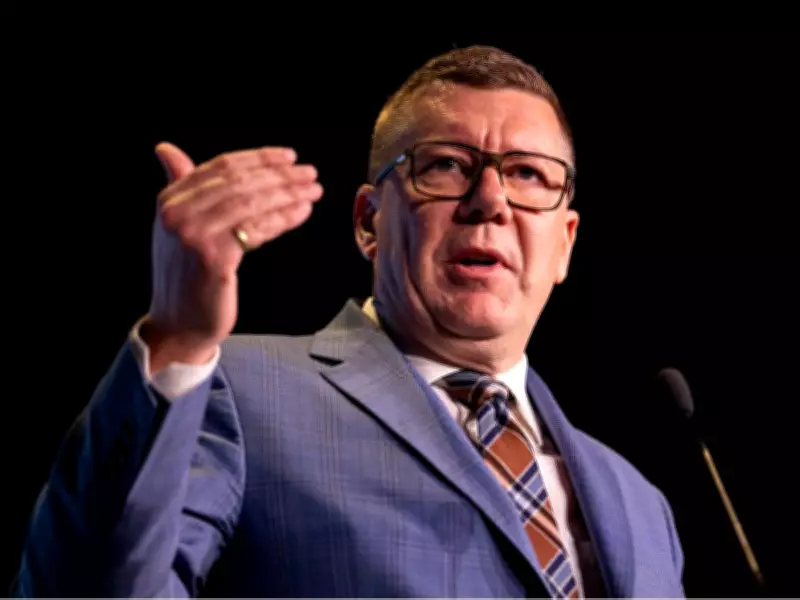
According to Premier Scott Moe, Saskatchewan residents will "see a deficit" when his government presents its upcoming budget on March 18, 2026, primarily due to "challenges ... on the revenue line." Moe hinted at declining revenues, stating, "We're not (going) to hire and fire people on the price of a barrel of oil." This indicates that after projecting a slim $75.8 million surplus for 2026/27 in last year's budget, the Moe government will run a deficit this year partly because of a drop in resource revenues.
The Problem with Volatile Resource Revenue
However, this situation highlights a persistent issue. The Moe government continues to rely on volatile resource revenue to balance the budget, a longstanding problem in Saskatchewan where governments often spend more money than they collect from more stable revenue streams, such as taxation. An unexpected decline in commodity prices can quickly turn an expected surplus into a surprise deficit.
Why Deficits Matter
Deficits are significant because taxpayers must pay off or pay interest on government debt. When the government runs a deficit and accumulates additional debt, Saskatchewanians bear the cost. In 2025/26, taxpayers are projected to pay $1.1 billion in government debt interest costs, which amounts to $843 per resident of Saskatchewan.

A Call for Fiscal Realignment
So, what is the solution? Rather than continuing to ride the resource roller-coaster, the Moe government should instead seek to align permanent spending with more reliable and stable sources of government revenue. This exercise is long overdue, as recent research shows that Premier Moe is the highest-spending premier on record in the province.
Record-High Spending and Government Size
Specifically, his government spent more each year on programs and services on a per-person, inflation-adjusted basis in 2021, 2022, and 2023 than any other government since 1965, the earliest year of comparable data. Part of the problem is an explosion in the size of government. Since 2015, the number of government-sector jobs, including federal, provincial, and local positions, in Saskatchewan increased by nearly 20 percent, while private-sector jobs grew by a paltry 2.3 percent.
Moving Forward
Clearly, rather than continuing to stake its fiscal fortunes on volatile resource revenues, the Moe government should get off the resource roller-coaster in its upcoming budget. This starts with reducing its record-high spending and the size of government. By doing so, Saskatchewan can achieve a more sustainable fiscal path that protects taxpayers from the uncertainties of commodity markets.