The world's shipowners have placed orders for a record number of new oil supertankers, surpassing a boom back in 2008 that ultimately led to a glut and a collapse in rates.
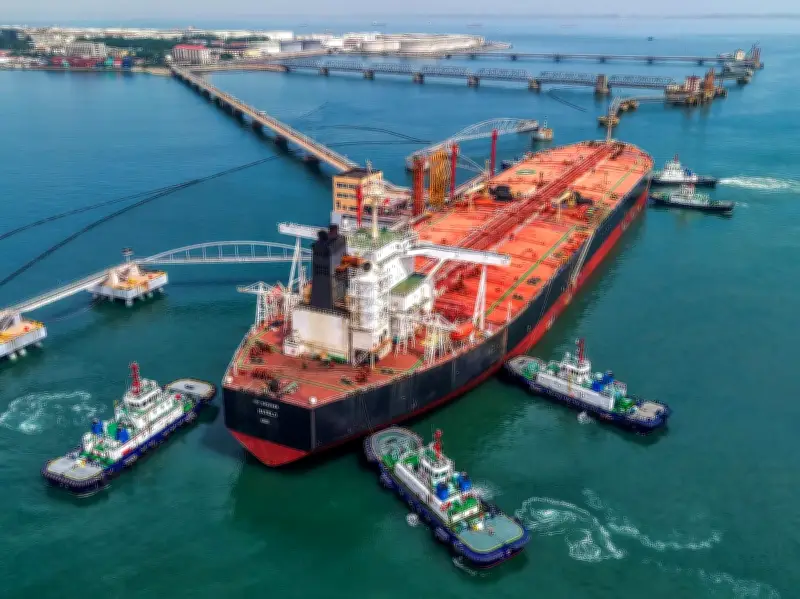
There are currently 262 supertankers, each capable of hauling 2 million barrels of crude oil, on order at shipyards around the world, according to Clarkson Research Services Ltd., a unit of the world's largest shipbroker. The number, which would be enough to handle the entirety of the vast U.S. crude oil-export program, exceeds the prior peak, set in October 2008.
Iran War Drives Market Surge
The market has been caught up in — and profited heavily from — the Iran war. Rates have doubled from pre-conflict levels and at times soared to all time highs of several hundred thousand dollars a day because of the disruption caused. However, the continued blockage of the Strait of Hormuz has also slashed cargo flows, which could in time dent earnings if sustained, especially if the conflict ultimately depresses long-term demand.

“It’s temporarily better,” than when the market boomed in 2004-08, George Economou, a Greek shipping billionaire and founder of TMS Group, said in the Greek capital. “But if it continues, it’s going to be bad for the tankers.”
Market Capitalization Soars
The market capitalization of 15 of the largest listed tanker stocks has topped US$60 billion at times since the war, according to data compiled by Bloomberg. It was barely half that at the start of the year — a sign of the scale of the surge for the vital cog of the world’s oil trade.
Big Buyers and Second-Hand Prices
There’s another reason many owners of supertankers are awash with cash too — an enigmatic South Korean shipowner, with backing from MSC Mediterranean Shipping Company SA, has been snapping up tankers at sky-high prices in recent months. That’s left many of the companies that sold to Sinokor with both smaller fleets and more money, some of which they’ve reinvested in new vessels.
Second-hand prices have also shot higher. A ship that’s 10 years old currently costs about US$115 million, the most since 2008, Clarkson data show.
Ordering Levels in Perspective
When assessed as a percentage of the existing fleet, the current level of ordering isn’t quite so big. By that marker the volume on order is equivalent to more than a quarter of the current fleet. Even so, that’s still the most since 2011 when the industry continued working off its ordering binge from three years earlier.
Halvor Ellefsen, a director at Fearnleys Shipbrokers UK Ltd. and a long-time attendee at Posidonia, said the current boom — and the ebullient mood in Athens last week — reminded him most of the market back in 2008.
Some owners point to the vast number of sanctioned ships as meaning the newbuild orders are necessary. The average age of the supertanker fleet is the highest since 1998, increasing the need for renewal, Clarkson data show.
Zoom out beyond the tanker fleet and there’s a similar picture. Across the industry as a whole, vessel orders are the biggest in 14 years.
“The biggest risk that shipping has right now is rich shipowners,” George Youroukos, executive chairman at container firm Global Ship Lease, told a panel at the Capital Link Maritime Leaders Summit.